Strava Fitness Score: Master Smarter Training for Peak Performance

So, what exactly is the Strava Fitness Score? In short, it’s a single number that tracks the big picture of your training. It’s not about your performance on any given day, but rather a running tally of your consistency and intensity over time. Think of it as a way to see how your fitness is building up with every run, ride, or swim you log.
Decoding Your Athletic Journey
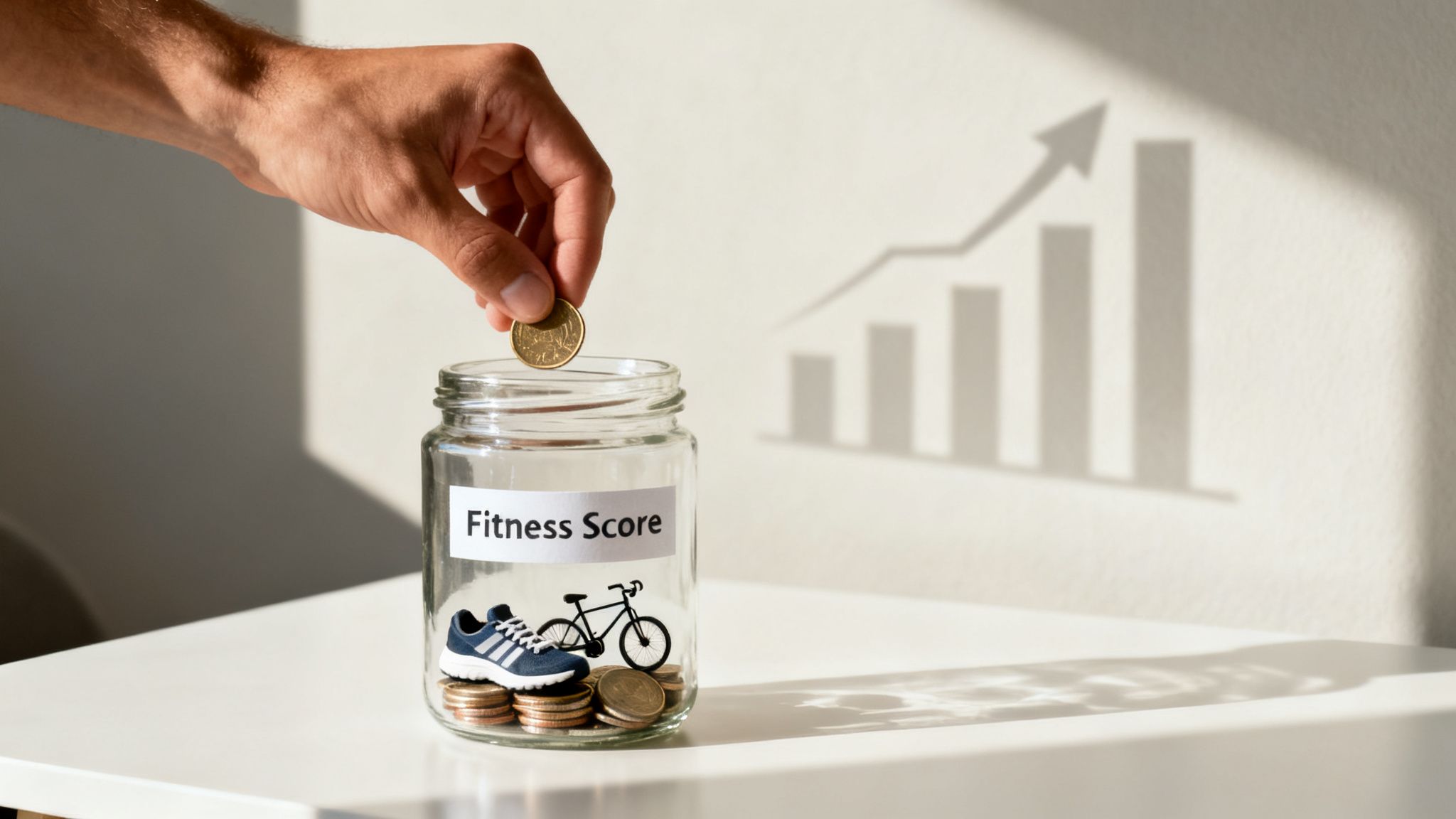
A great way to think about your fitness is like a long-term investment. Every workout you do is a deposit, slowly but surely growing your overall fitness "capital." The Strava Fitness Score is simply the number that tracks this growth. This handy metric is the heart of the "Fitness & Freshness" feature, which is available to all Strava subscribers.
The key thing to remember is that it's all about the trend, not the specific number. A high score doesn't automatically mean you're faster than someone with a lower score. It just means you’ve been putting in more work and have a higher training load. Getting that distinction right is crucial for using the score to your advantage.
The Three Pillars of Fitness and Freshness
To really get what the Fitness Score is telling you, it helps to understand the three interconnected parts that paint the full picture of your training status.
- Fitness: This is the headline number. It’s a reflection of your cumulative training load and it builds slowly with consistent effort. When you see this number trending up, it’s a good sign you’re progressively overloading your body and getting stronger.
- Fatigue: This one tracks the short-term strain from your recent workouts. Go crush a hard interval session or a long weekend run, and you’ll see your fatigue spike. It climbs quickly but, thankfully, it also fades much faster than your fitness builds.
- Form: Think of this as your "race readiness." Strava calculates it by subtracting your Fatigue from your Fitness. A positive Form score means you’re well-rested and primed to perform. A negative score, on the other hand, suggests you might be carrying a bit too much fatigue from a heavy training block.
To make this crystal clear, here’s a quick breakdown of what each metric tells you and how it generally feels in your day-to-day training.
Fitness and Freshness Components at a Glance
| Metric | What It Measures | How It Feels |
|---|---|---|
| Fitness | Your long-term, cumulative training load. Builds slowly. | Feeling strong, capable, and seeing progress over weeks and months. |
| Fatigue | Your short-term training strain from recent, hard workouts. Spikes quickly. | Sore legs, feeling tired, and needing a recovery day. |
| Form | Your readiness to perform, calculated as Fitness minus Fatigue. | When positive: feeling sharp, rested, and ready to go fast. When negative: feeling flat or overworked. |
These three numbers work together to tell a story. When you're deep in a training block, your Fitness will be high, but so will your Fatigue, likely pushing your Form into the negative. As you taper for a race, your Fitness might dip slightly, but your Fatigue will drop much faster, bringing your Form into that positive, race-ready zone. It’s all about balancing the work with the rest.
How Strava Calculates Your Fitness Score
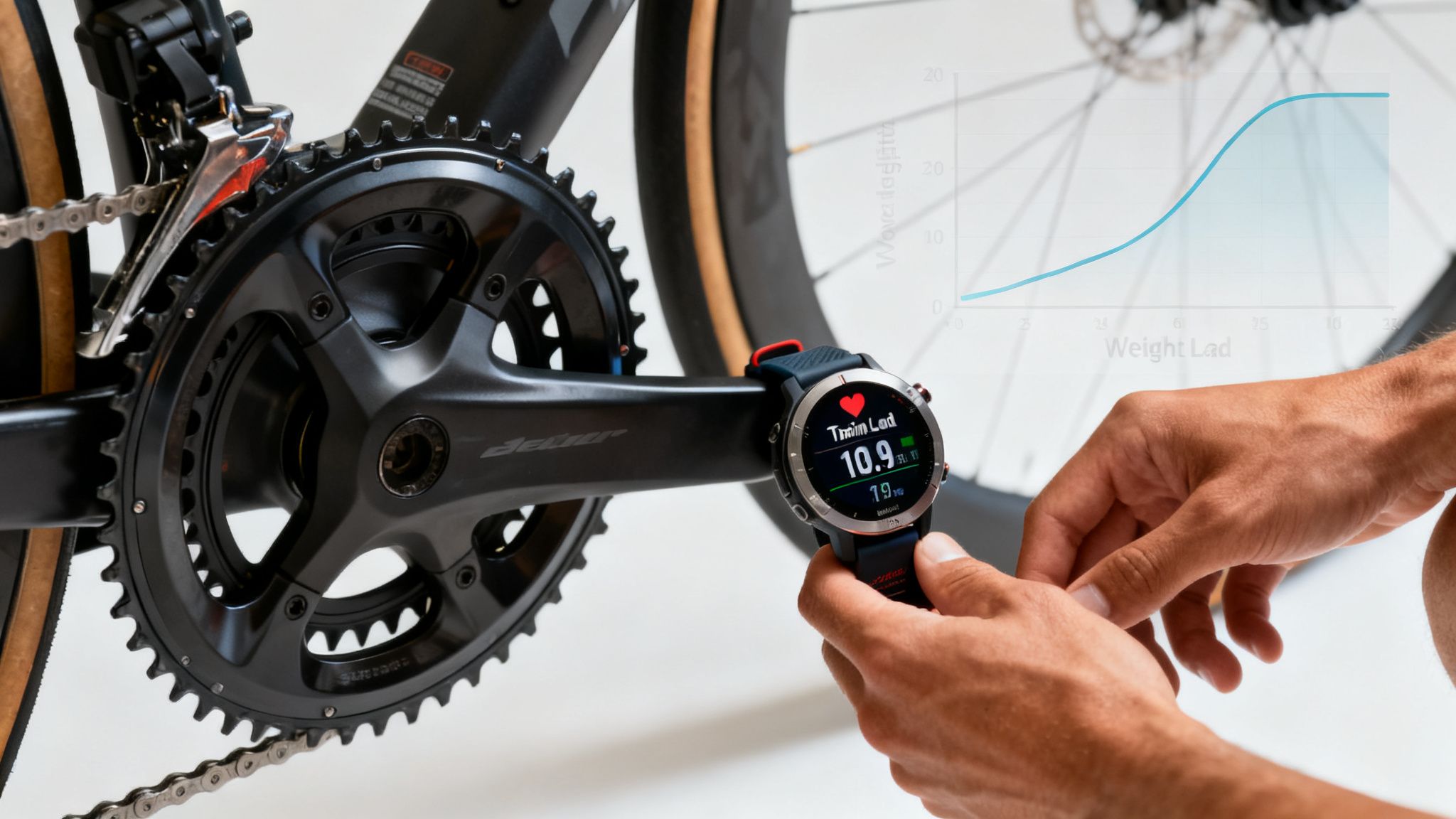
So, how does Strava take all your hard work and distill it into a single number? It all starts with a metric called Training Load, which is simply Strava's way of measuring how much stress you put on your body during any given workout. Think of Training Load as the raw ingredient that the whole Fitness Score recipe is built on.
To figure out your Training Load, Strava needs to see how intense your workout was. It primarily does this in one of two ways. For most activities like running, hiking, or swimming, it looks at your heart rate data to generate what it calls a Relative Effort score. If you're a cyclist with a power meter, it uses that data for a more direct measurement of your output. Without one of these two inputs, Strava is just guessing, and can't accurately calculate your load. If you're curious about how different devices feed this data into the platform, our guide on Fitbit and Strava integration breaks it down further.
A Weighted Average That Prioritizes Recent Efforts
Here’s where it gets clever. Strava doesn't just add up your Training Loads day after day. Instead, it uses a weighted average that places a much bigger emphasis on your most recent workouts. This is the key to understanding the whole system.
That killer interval session you did yesterday? It’s going to have a far greater impact on your score than the long, slow run you did six weeks ago. This makes your score a living, breathing number that reflects where your fitness is right now. The effect of older workouts naturally diminishes over time, mimicking how their actual physiological benefits fade. This design prevents your score from getting stuck at a high number from a huge training block you completed last season.
The core principle is simple: what you did recently matters most. Strava’s calculation is designed to mirror how your body adapts, with recent, consistent training having the greatest effect on your present-day fitness.
Putting It All Together: A Marathon Training Example
Let's walk through a real-world scenario to see this in action. Imagine a runner named Alex is training for a marathon over 16 weeks.
- Weeks 1-12 (Building Phase): Alex is putting in the work—long runs, tempo sessions, and track workouts. Week after week, their Training Load is consistently high, and we see their Fitness Score steadily climb from a starting point of 35 all the way up to 70.
- Weeks 13-14 (Peak Weeks): This is the toughest part of the plan. Alex hits their highest mileage and most intense workouts. The Training Load is maxed out, and their score reflects that, nudging up to a peak of 75.
- Weeks 15-16 (Taper): Time to rest up. Alex strategically cuts back on mileage and intensity to let their body recover for the big day. The weekly Training Load plummets, and consequently, their Fitness Score starts to dip, maybe down to 68 by race morning.
Seeing that score drop during the taper can be alarming, but it’s not a sign that Alex is losing fitness! It’s the system working exactly as it should. The weighted average is simply responding to the lower workload. Meanwhile, Alex's "Form" (or race readiness) is soaring, setting them up for a fantastic performance.
How to Interpret Your Fitness Score and Trends
It’s easy to get fixated on the number itself, but a high Strava fitness score doesn't automatically mean you’re ready for a podium finish. The real magic happens when you stop comparing your score to others and start tracking your own personal trends over time.
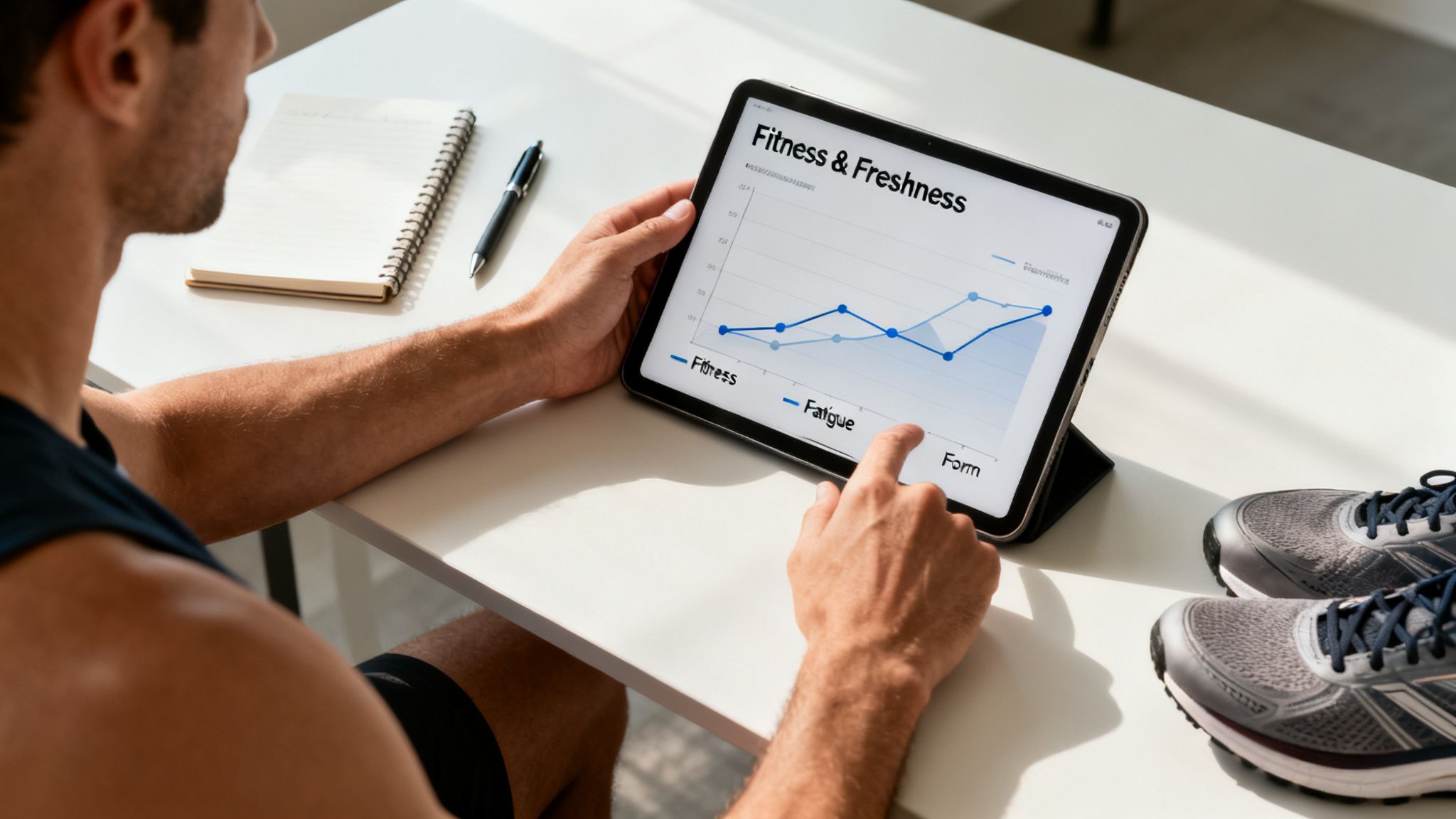
Think of your Fitness & Freshness graph less like a report card and more like a story about your body's conversation with your training plan. The goal is to learn how to read that story, spotting the clues that signal progress, fatigue, and peak readiness.
Reading the Signals in Your Graph
The curve of your fitness score gives you immediate, practical feedback. Every dip and peak means something, and once you learn the language, you can make much smarter decisions about when to push and when to rest. Here’s what the trends are telling you:
-
Upward Trend: A score that’s consistently climbing is a great sign. It’s visual proof that your training load is effective and your hard work is paying off by building a solid fitness base. This is exactly what you want to see during a dedicated training block.
-
Flatlining Score: If your score hits a plateau, it means your body has caught up and adapted to your current routine. Your training load has stabilized. If your goal is to keep improving, this is your cue to mix things up by adding a little more intensity or volume.
-
Downward Trend: A falling score isn't always a bad thing, but you need to know why it's happening. A planned drop is a key part of tapering, where you cut back on training to shed fatigue and hit the starting line fresh. However, an unplanned drop is often a red flag for a break in consistency due to injury, illness, or just life getting in the way.
The key is to stop comparing your number to others and start using it to make smarter decisions about your own training. Your score of 55 might reflect peak fitness for your goals, while another athlete's 95 is simply their baseline.
Context is Everything
Your personal goals are the lens through which you should view these trends. A marathon runner in a peak training week wants to see that score rise, even if it comes with high fatigue. But during a recovery week, a slight dip in fitness isn't just expected—it's necessary for your body to absorb all that hard work and come back stronger.
This personalized approach is what makes Strava such a powerful tool for athletes of all levels. The platform has become a central hub for over 180 million users in more than 185 countries, all using these tools to follow their own unique journeys. You can see more on this in a breakdown of recent statistics. This global community shows that tracking trends works for everyone, from those training for a local 5k to an Ironman. And for those of us logging miles indoors, our guide on using Strava for treadmill runs has some specific tips.
Clearing Up Common Misconceptions About the Fitness Score
The Strava Fitness Score is an incredibly useful tool, but it's easy to get tangled up in the numbers and what they seem to mean. To really get the most out of it, you have to understand what it isn't. Let's bust a few common myths so you can use it to train smarter.
Myth 1: A Higher Score Means You're a Better Athlete
This is the biggest trap of them all. It's so tempting to look at your score and compare it to a friend's, but that's a surefire way to misinterpret the data. Your score reflects your accumulated training load—that's it. It’s a measure of work, not a ranking of talent.
Think about it this way: an elite marathoner deep in a training block might have a score of 95, while a world-class 800-meter runner could peak around 50. Is the marathoner "better" or "fitter"? No. Their event simply demands a colossal amount of training volume, which drives the score way up.
- Triathlete: Juggling three sports often means logging 15-20 hours a week. Their score will naturally be very high.
- 5k Specialist: Their training is all about sharp, high-intensity efforts, so the total volume is much lower. Their score will be lower too, but it's exactly what you'd expect for their discipline.
Comparing your score to someone training for a completely different goal is like comparing apples and oranges. The only comparison that matters is you vs. you, yesterday.
Your Fitness Score is a measure of your training volume and intensity, not a direct measurement of your race-day performance. It’s a personal tool for a personal journey.
Myth 2: The Score Is a Perfect Measurement of Fitness
Strava's model is brilliant, but it's still just that—a model. It can only crunch the numbers you feed it, like your heart rate or power data. It has absolutely no window into the rest of your life, which plays a massive role in your actual, real-world fitness.
The algorithm can't see some of the most critical factors for recovery and performance. These include:
- How well you slept last night
- Your nutrition and hydration levels
- Stress from work or your personal life
- General mental fatigue
This is exactly why the old wisdom of "listening to your body" will never be replaced by an algorithm. Your score might be a solid 70, but if you feel wiped out from a week of terrible sleep and deadlines, your body is giving you the real story. Trust that feeling.
Myth 3: The Input Data Is Always Flawless
Remember the old saying, "garbage in, garbage out"? The accuracy of your Fitness Score is only as good as the data you give it. Heart rate is the most common input, but it can be notoriously fickle.
Ever run on a brutally hot and humid day? You probably noticed your heart rate creeping up, even when your pace didn't change. That phenomenon is called cardiac drift, and it can trick the system.
Strava sees that elevated heart rate and thinks you're putting in a monster effort, which inflates your Relative Effort and, in turn, your Fitness Score. The model can't tell the difference between a genuinely hard workout and a workout on a sweltering day. Always look at your data with a bit of context.
Using Your Score to Train Smarter
Knowing what your Fitness Score means is the first step. The real magic happens when you start using that number to make better decisions in your training. The goal isn't just to chase a higher score—it’s about managing the peaks and valleys so you show up on race day feeling fantastic.
A classic mistake is trying to jam the score upward with constant, hard-as-you-can workouts. Sure, those big efforts will spike your Training Load and give the score a quick boost, but they also send your fatigue through the roof. A much better way to build lasting fitness is to focus on consistency. A steady rhythm of purposeful, moderate workouts builds a much deeper and more resilient fitness base than a few heroic, all-out sessions ever could.
Think of it like building a foundation for a house. You can't rush it. This approach prevents burnout and allows your score to climb in a way that’s actually sustainable.
Balancing Intensity and Recovery
Any good training plan is a balancing act. Your Fitness Score gives you a visual way to see how different workouts affect your fitness and fatigue, which is incredibly useful for structuring your week.
-
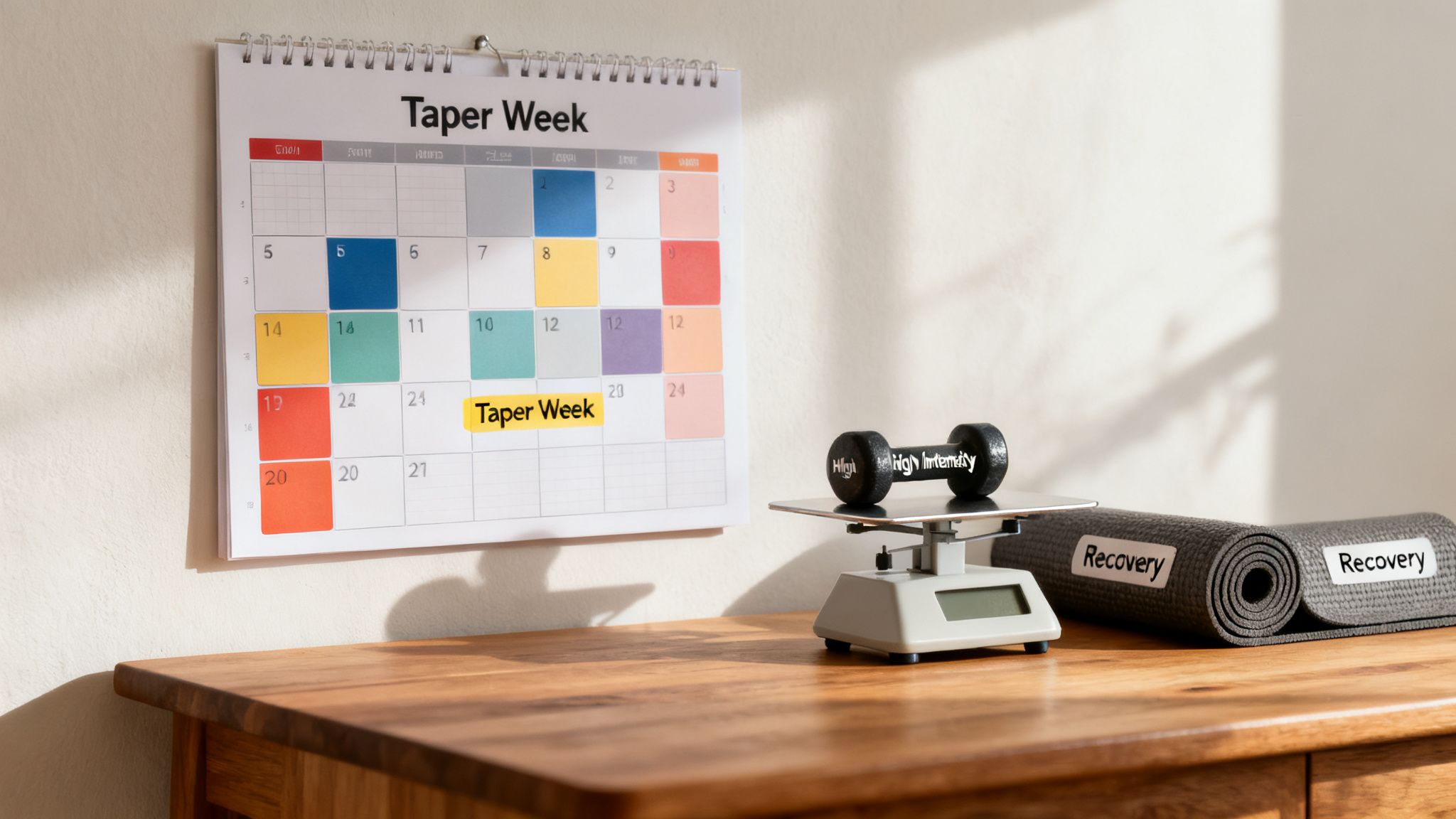
High-Intensity Days: These are your big score-builders. We’re talking about interval runs, tough hill repeats, or threshold bike rides. Plan for 1-2 of these a week to give your body the strong signal it needs to adapt and get faster.
-
Low-Intensity Days: These are the unsung heroes of any training block. Long, slow runs or easy recovery spins are perfect for building your endurance base without piling on a ton of stress. They keep your fitness ticking upward without digging you into a hole.
-
Rest Days: Don't ever skip these. A day of doing nothing is when your body actually does the hard work of repairing muscle and getting stronger. Your Fitness Score will dip a little on rest days, and that's completely normal. In fact, it's a sign you're doing things right.
This idea of balance works across different sports, too. It’s no surprise that while running remains the most popular activity on Strava, walking and multi-sport training are on the rise. Mixing things up builds a more well-rounded and injury-resistant athlete. You can dive deeper into these trends in the Year in Sport report.
Nailing Your Taper for Peak Performance
This is where the whole Fitness & Freshness system really proves its worth. The "Form" metric—which is simply your fitness minus your fatigue—is your secret weapon for arriving at the start line ready to fly. As you get closer to your big event, you'll start to intentionally cut back on your training volume. This is called the taper.
The goal of a taper is to shed all that built-up fatigue while holding onto the fitness you’ve worked so hard for. Your Fitness Score will drop a bit, but your Form score should climb into a positive, peak range.
In the final week or two before your race, workouts get shorter and easier. You'll see your Fatigue line on the graph take a nosedive while your Fitness line only dips slightly. The result? Your Form score shoots up, which means you're getting fresh and sharp. If you can get your Form into the +5 to +25 range on race day, you've absolutely nailed your timing.
Turning Training Data Into Lasting Motivation
At the end of the day, your Strava Fitness Score is more than just a number. It's a story—a narrative of your hard work, your progress, and the goals you've crushed along the way. While the charts are fantastic for guiding your training, their real value is in what they represent: your actual, real-world accomplishments.
This kind of data-driven training is catching on. According to Strava's latest report, the community now spans over 185 countries, with athletes giving each other 20% more kudos year-over-year. People aren't just training in a bubble; they're sharing their milestones, cheering each other on, and inspiring more and more people to tackle everything from their first 5K to a 100-mile ride.
Once you've used all this data to nail a peak performance or complete a truly memorable adventure, you can turn that journey from a graph on a screen into something tangible.
From Data to Decor
The real prize for all that effort isn't a higher Fitness Score—it's the feeling of crossing a finish line or conquering a new trail. Capturing that feeling is what it's all about. This is the perfect time to commemorate the journey your Fitness Score represents by creating a physical memento, like a personalized map of your route.
If you ever find that drive starting to fade, a tangible reminder of what you’ve achieved can be a powerful kickstart. For more ideas, check out our guide on how to motivate yourself to run.
Got Questions? We've Got Answers
Once you start tracking your Fitness Score on Strava, a few questions inevitably pop up. Let's dig into some of the most common ones so you can use this metric with confidence.
Why Is My Friend's Fitness Score So Much Higher Than Mine?
It's tempting to compare, but trust me on this one: your Fitness Score is not a leaderboard. Think of it as your personal training diary, not a ranking. The number is calculated based on your specific training history, the kind of workouts you do, and the data you're feeding the system.
A triathlete grinding out 15 hours a week is going to have a much higher score than a 5k runner who trains for five hours. It doesn't mean the triathlete is a "better" athlete, just that their training volume creates a higher cumulative load. Your score reflects your journey, period.
I Took a Week Off and My Score Dropped! What Gives?
First off, don't panic! A drop in your score during a rest week is not just normal—it's expected. The score is a rolling average that heavily weights your most recent workouts. When you take a break, you're not adding new training stress, so the number naturally drifts downward.
A falling Fitness Score during a rest week or taper is actually a good sign. It means your body is shedding fatigue and absorbing all the hard work you put in before. This is exactly what you want before a big race.
Remember, rest is where the magic happens. It’s when your body adapts and gets stronger. That dip in your score is a necessary part of any smart training plan.
Is a Heart Rate Monitor Really Necessary for an Accurate Score?
Yes, absolutely. This is the one non-negotiable part of the equation. To get a meaningful Fitness Score, Strava needs heart rate data. For cyclists, a power meter works too.
Without one of those devices, Strava can't calculate your Relative Effort or Training Load, which are the fundamental inputs for the entire Fitness & Freshness graph. Any activity you log without heart rate or power data—like just using your phone's GPS—simply won't be factored in, leaving a huge hole in your training picture.
Your data tells a story of dedication and triumph. Turn that story into a stunning piece of art with RoutePrinter. Create your personalized race poster today.