What to Wear for Triathlons: The Essential Gear Guide

If you're new to triathlon, you've probably stared at a mountain of gear and wondered, "What on earth do I actually wear on race day?" The simple answer? A trisuit. This single piece of kit is your secret weapon, designed to get you from the swim to the bike and through the run without a single wardrobe change.
Your Essential Triathlon Race Day Wardrobe
Think of your triathlon outfit less like separate clothes and more like a high-performance uniform built for three completely different sports. The whole game is about efficiency—saving time in transitions and staying comfortable from start to finish. Fumbling with a full change of clothes between the swim, bike, and run isn't just slow; it's practically impossible in a crowded, open transition area. That's why having one versatile outfit is the cornerstone of any good race-day plan.
Your gear needs to work like a second skin, moving with you without chafing, bunching, or holding you back. Baggy shorts or a loose t-shirt will feel like a parachute in the water and on the bike, literally dragging you down and draining your energy. A sleek, well-fitting kit, however, cuts through the water and wind, supports your muscles, and lets you focus on your performance.
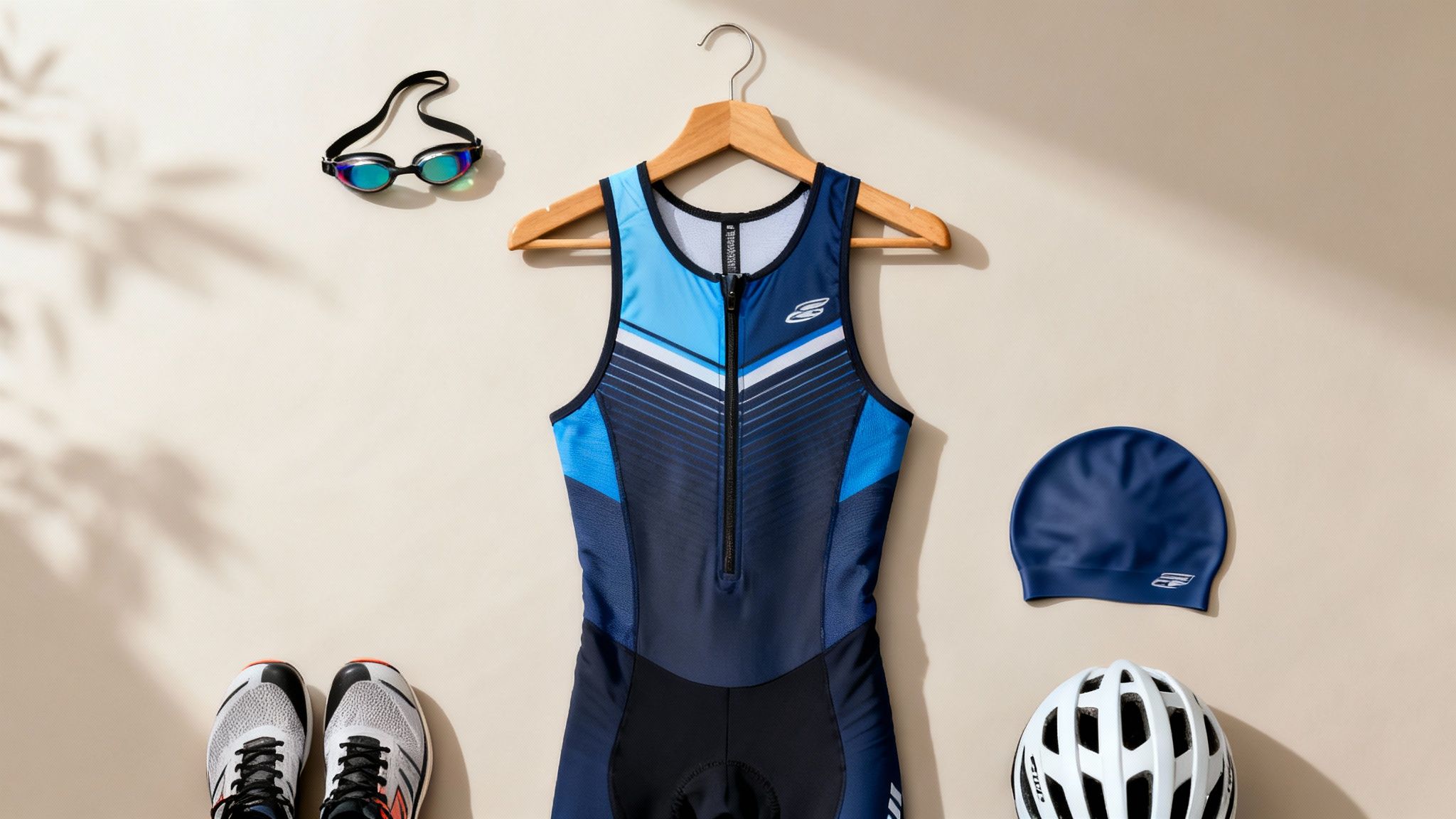
Core Gear for Each Discipline
So, what does this look like in practice? Let's walk through the essential apparel and accessories you'll need for each leg of the race. Getting this mental checklist down will make everything else click into place.
-
For the Swim: You'll start the race wearing your trisuit as your base layer. Depending on the water temperature, you might pull a wetsuit on over it for extra buoyancy and warmth. Goggles and a race-issued swim cap are always mandatory.
-
For the Bike: Once you're out of the water and in the first transition (T1), you'll quickly add your helmet, sunglasses, and cycling shoes. The thin, quick-drying pad (chamois) built into your trisuit provides just enough cushion for the ride without feeling bulky on the run.
-
For the Run: In the second transition (T2), it's time to rack your bike, ditch the helmet, and swap your cycling shoes for running shoes. Many athletes also grab a hat or visor to keep the sun and sweat out of their eyes for the final push.
To simplify this, here's a quick rundown of the gear you'll need for each part of your race.
Triathlon Gear Essentials at a Glance
| Discipline | Core Apparel | Essential Accessories |
|---|---|---|
| Swim | Trisuit (Wetsuit optional) | Goggles, Swim Cap |
| Bike | Trisuit | Helmet, Cycling Shoes, Sunglasses |
| Run | Trisuit | Running Shoes, Race Belt, Hat/Visor |
This table shows how the trisuit remains your constant, while accessories are added or swapped to match the demands of each discipline.
The logic of wearing the same outfit for the duration of your triathlon is not just about expediency, but logistics. Moving from swim to bike to run happens openly in the transition area, making quick changes your best friend.
This integrated system means you spend less time wrestling with clothes and more time focused on racing. Every piece of your kit has a job to do, and when it all works together, you're set up for a smoother, faster, and much more enjoyable day.
Now, let's get into the nitty-gritty of each item, starting with the most important piece of them all: the trisuit.
The Trisuit: Your All-In-One Racing Solution
If there's one piece of gear that defines a triathlete's race day, it's the trisuit. Think of it as your secret weapon—a single, highly-engineered outfit that takes you from the starting cannon to the finish line without ever needing a change. It's the simple answer to the often-overwhelming question of what to wear, cutting out the hassle of fumbling with different clothes in a crowded transition zone.
This isn't just any old piece of athletic wear. A trisuit is specifically designed to perform across all three disciplines. It’s what you’ll wear under your wetsuit, what you’ll ride in, and what you’ll run in, providing comfort, support, and a serious aerodynamic edge the entire time.
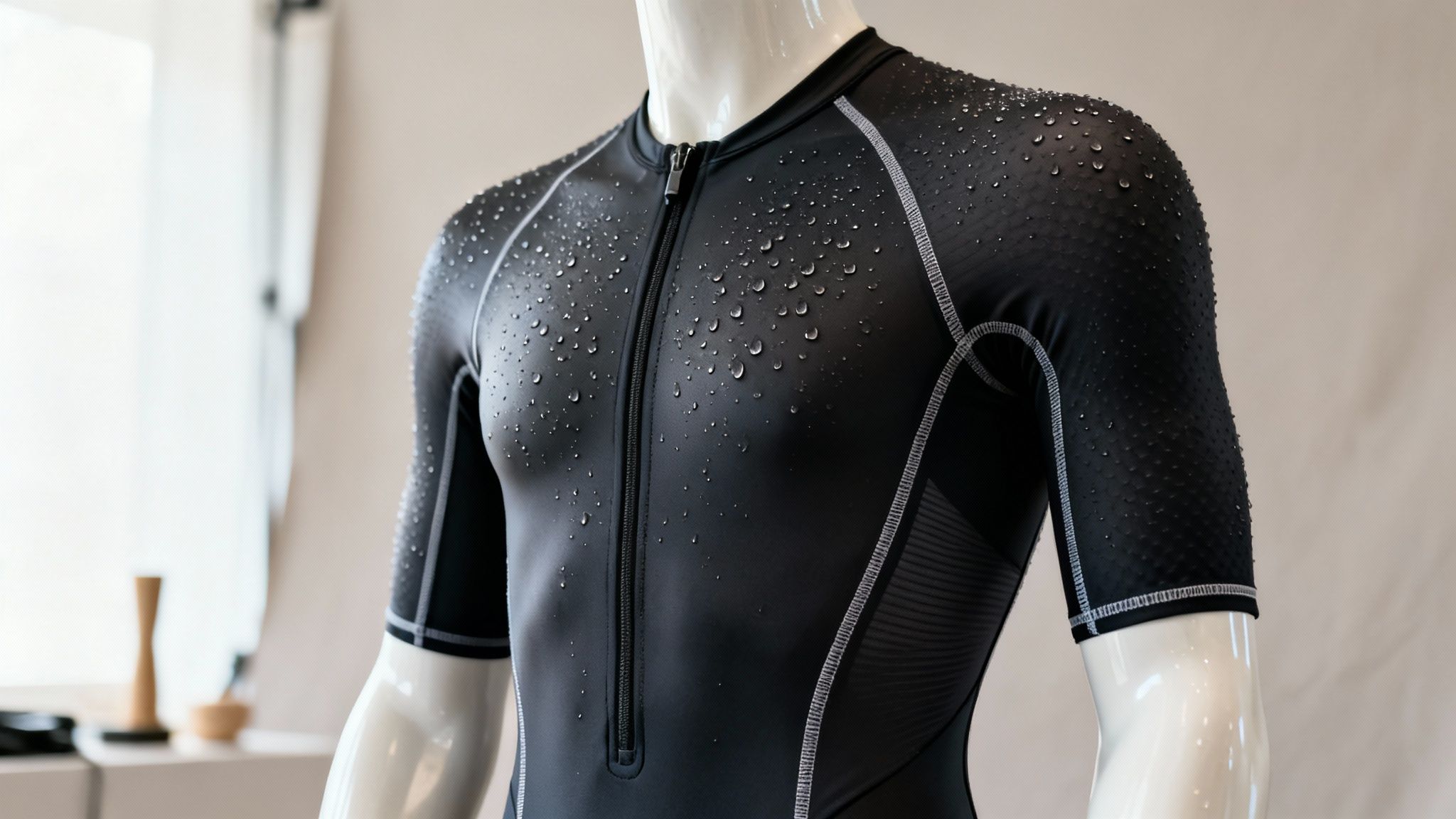
Why a Trisuit Works So Well
The real genius of a trisuit is in its material and minimalist construction. The fabric is slick and water-repellent (hydrophobic), much like a high-end swimsuit, helping you cut through the water with less drag. But the magic happens when you get out of the water. That same material dries incredibly fast, so you aren't left feeling soggy and weighed down for the bike and run.
Perhaps the most critical feature is the chamois (pronounced "shammy"). This is the small pad stitched into the shorts. It provides just enough cushioning to keep you comfortable on the bike saddle but is far thinner and more flexible than the bulky pad you'd find in dedicated cycling shorts. The result? You won’t feel like you’re running in a wet diaper on the final leg of your race.
The numbers don't lie. Around 80% of modern triathletes choose to race in trisuits. These sleek garments, usually made from advanced nylon-spandex blends, have been shown to cut down drag in the water by up to 4.9% and can make you 2-3% faster on the bike, according to wind tunnel tests.
One-Piece Versus Two-Piece Trisuits
Your first big decision is whether to go for a one-piece or a two-piece trisuit. Each has its own set of pros and cons, and the right choice often comes down to your race distance, body type, and personal preference.
One-Piece Trisuits:
- Built for Speed: A single, seamless garment creates the smoothest possible profile against wind and water. It's the top choice for athletes chasing every last second.
- No-Fuss Coverage: You never have to worry about your top riding up and exposing your back to the sun or creating extra drag.
- Pure Simplicity: Just pull it on and you're good to go. It’s one less thing to think about on race morning.
Two-Piece Trisuits:
- Mix-and-Match Fit: This is a huge advantage if you wear a different size on your top and bottom.
- Easier Bathroom Breaks: For longer races like a 70.3 or full Ironman, a two-piece makes nature's call a much quicker and less complicated affair.
- Better Ventilation: Some athletes find that the separation between the top and shorts allows for more airflow, which can be a real blessing in scorching hot conditions.
If you’re just getting started or competing in a shorter event, check out our guide on a relay team triathlon, which explores different race formats where gear choices can really make a difference.
Sleeved or Sleeveless: The Aero and Sun Protection Debate
The next choice you'll face is whether to get sleeves. It might seem like a small detail, but it has a real impact on your performance and comfort.
Sleeveless trisuits have long been a favorite because they offer total freedom of movement for your shoulders, which many people prefer for the swim stroke. They also feel cooler in really hot, humid weather.
However, sleeved trisuits have quickly become the new standard for most competitive triathletes, and for good reason. The sleeves are usually made from a special textured fabric that smooths the airflow over your shoulders and arms, giving you a measurable speed boost on the bike.
Modern sleeved trisuits are the go-to choice for most triathletes, offering a powerful combination of aerodynamic gains on the bike and crucial UPF 50+ sun protection for your shoulders during long hours of exposure.
Ultimately, deciding between them comes down to what you value most: maximum shoulder mobility for the swim, or a faster bike split and better sun protection. Once you understand these key differences, you can pick the perfect trisuit to help you race faster and feel great doing it.
Dressing for the Swim: Wetsuits, Goggles, and Caps
For a lot of people, the swim leg feels like the most intimidating part of a triathlon, especially if you're just starting out. But having the right gear is like having a secret weapon; it can turn that pre-race anxiety into pure confidence. You'll already have your trisuit on, but the essential items for this first discipline are your wetsuit, goggles, and swim cap.
A good triathlon wetsuit is probably the most important piece of gear you'll have for the swim. It does a lot more than just keep you warm in chilly water. Think of it as your personal buoyancy suit, engineered with neoprene panels of different thicknesses placed in strategic spots. This design is brilliant because it lifts your hips and legs up toward the surface.
That lift is a total game-changer. It automatically puts your body in a more streamlined position, which cuts down on drag and lets you swim faster and more efficiently. You'll save a ton of energy that you'll be very grateful for later on the bike and run.
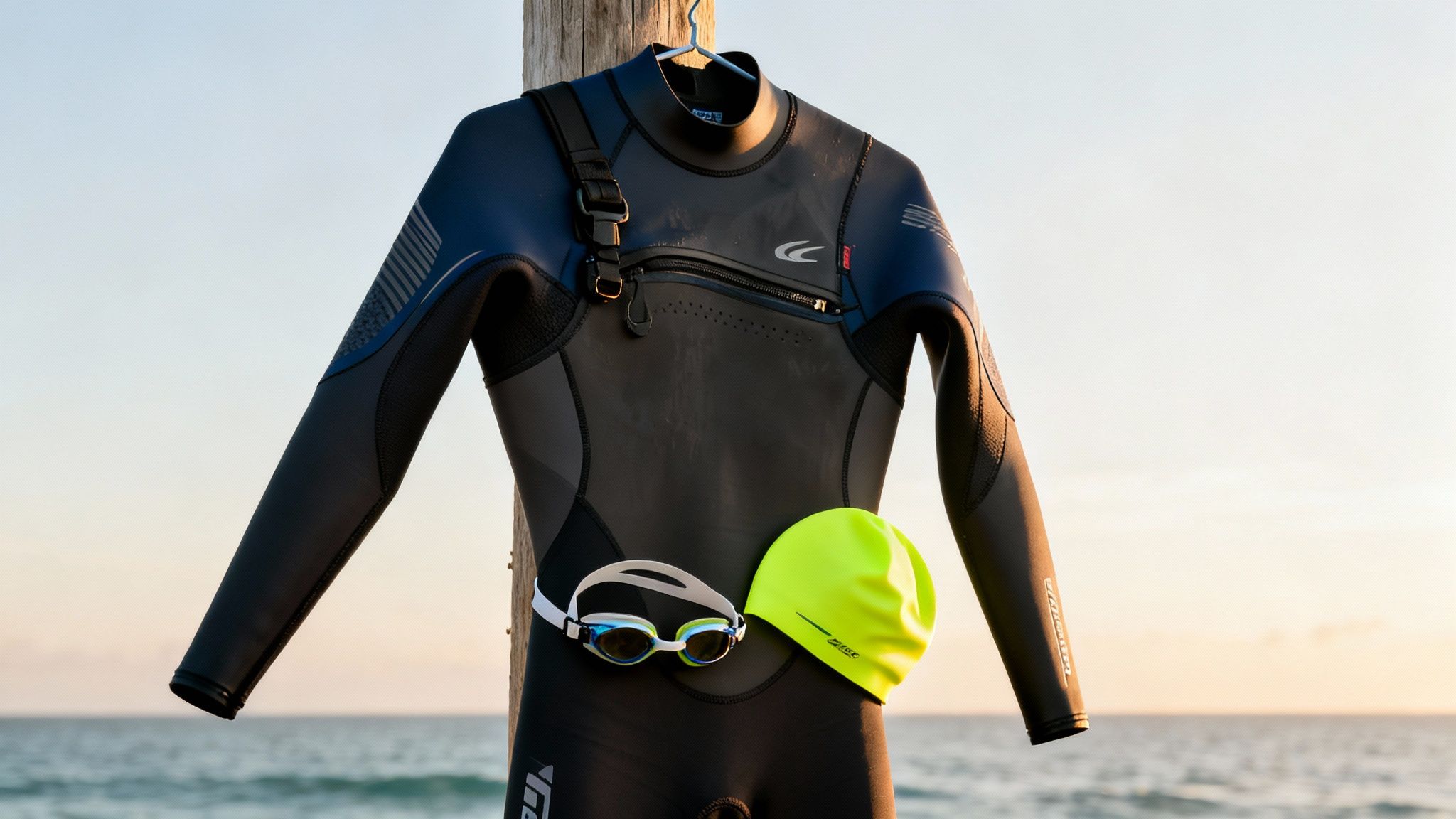
Understanding Wetsuit Rules and Types
Now, it's important to know that you can't just wear a wetsuit whenever you feel like it. Race organizers have strict rules based on water temperature to keep things fair and safe for everyone. The specifics can vary, but a common standard is that wetsuits are mandatory below a certain temperature (like 60.8°F / 16°C), optional in a middle range, and flat-out banned above a certain threshold (say, 76.1°F / 24.5°C). Always, always check the rules for your specific race ahead of time.
When you do get to wear one, you've basically got two choices. Each has its own pros and cons depending on your swimming style and how you feel in the water.
- Full-Sleeve Wetsuits: These cover your entire arms and legs, giving you the most buoyancy and warmth. They're the most popular choice for a reason—they offer the biggest hydrodynamic advantage, helping you slice through the water with less effort.
- Sleeveless Wetsuits: Sometimes called "Long Johns," these suits keep your legs covered but leave your arms totally free. They're a fantastic option for strong swimmers who feel like sleeves mess with their natural stroke, or for races in warmer water where overheating could be an issue.
Don't make the common mistake of thinking a triathlon wetsuit is the same as a surfing wetsuit. They are completely different beasts. A tri wetsuit is made from super-flexible neoprene designed for a full range of shoulder motion. A surfing wetsuit is built for warmth and durability, which makes it incredibly restrictive and difficult to swim in.
Getting Goggles and Caps Right
Beyond the wetsuit, two smaller pieces of gear are absolutely non-negotiable: goggles and a swim cap. Nailing your choice here is the difference between a smooth swim and a disorienting, frustrating one.
Your goggles are your window to what's going on. A leaky, foggy pair can sabotage your race before you even get out of the water. The secret is finding a pair that creates a perfect seal in your eye sockets. A great way to test them in the store is to press them to your eyes without the strap; if they stick for a few seconds from the suction alone, you've likely got a good fit.
Pro Tip for a Leak-Proof Fit:
- First, press the goggles onto your eyes to get that initial seal.
- Then, pull the strap over your head. Make sure it sits at a slight upward angle on the back of your head, not straight back.
- Finally, pull your swim cap down so it covers the top edge of your goggles. This helps lock them securely in place.
Speaking of the swim cap, in nearly every race, the organizers will hand you a brightly colored one. This isn't just for show; it's a critical safety measure. The different colors help lifeguards and race officials spot and identify athletes in various waves, making it much easier to keep an eye on everyone. It’s almost always mandatory to wear the official race cap.
Gearing Up for the Bike: Helmets, Shoes, and Aero Advantages
Once you’re out of the water and jogging into the first transition (T1), your mindset shifts entirely to the bike. This is where safety, comfort, and aerodynamics take over. Your trisuit is already working on drying off, but the gear you’re about to add is all about making you faster and more efficient on the road, saving that precious energy for the run.
The very first, and most critical, piece of gear you'll grab is your helmet. This is completely non-negotiable; race rules are strict, and you absolutely cannot leave the transition zone without a helmet securely fastened on your head.
For most triathletes, especially if you're just getting started, a standard road cycling helmet is the perfect choice. They’re designed with plenty of vents to keep air flowing and your head cool on hot race days. Plus, they're lightweight, comfortable, and deliver the protection you need.
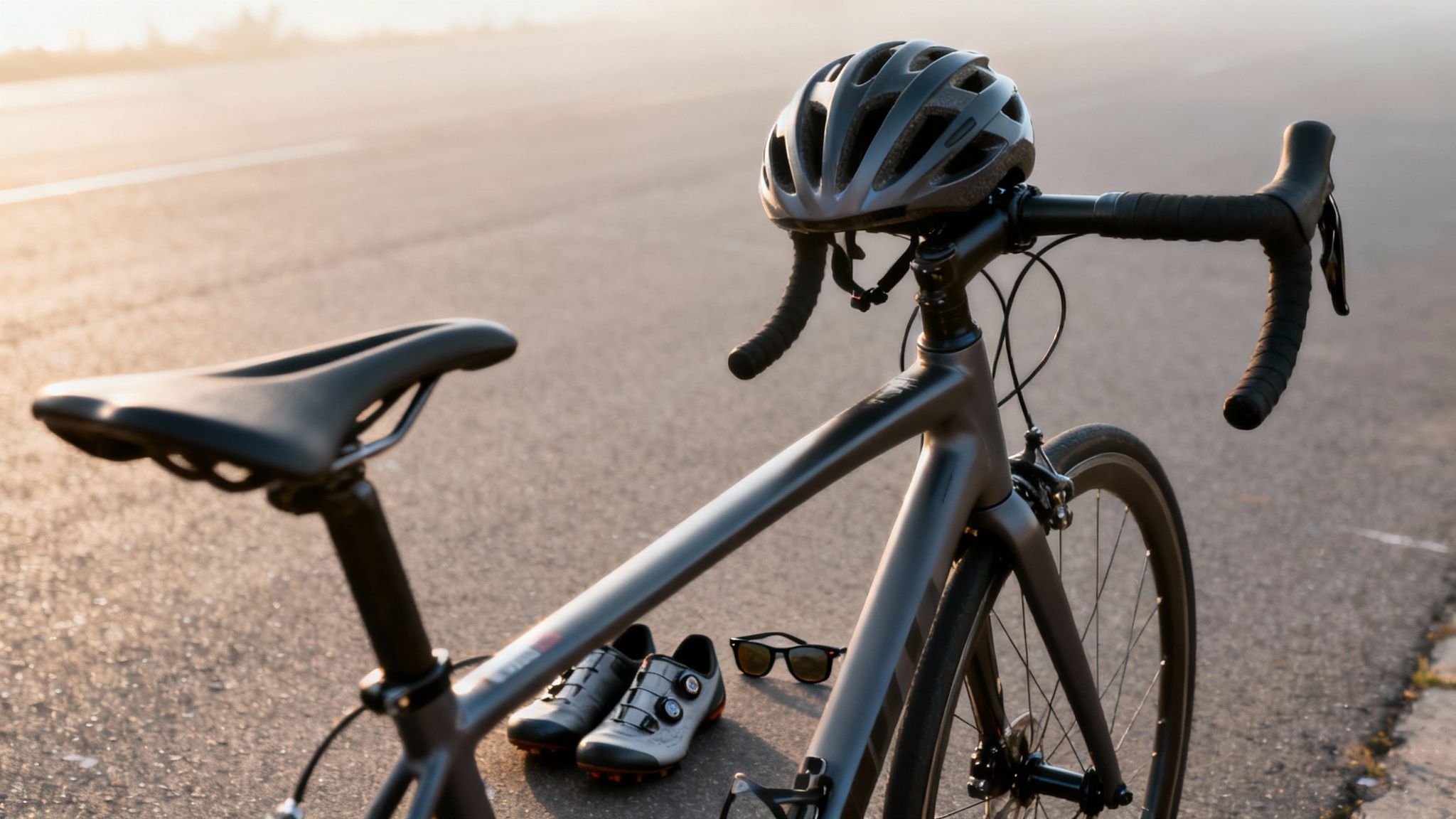
Road Helmets Versus Aero Helmets
As you dive deeper into the sport, you'll start noticing athletes wearing specialized time trial (TT) or aero helmets. These have a distinct teardrop shape with very few vents, all designed to smooth airflow over your head and back to cheat the wind. Think of it like holding a flat piece of cardboard in a stiff breeze versus a sleek, pointed nose cone. The aero helmet simply cuts through the air, and that can save you minutes over longer races like a 70.3 or full Ironman.
But that speed comes with a few trade-offs. Aero helmets get hot because they have less ventilation, which can be a real problem in warmer climates. They also demand that you hold a very specific, tucked head position to get the full aerodynamic benefit. For beginners and most age-group athletes, a well-ventilated road helmet is easily the smarter, more comfortable, and safer bet.
The Power of Cycling Shoes and Clipless Pedals
Next up: your feet. While you can get through a triathlon using running shoes on flat pedals, upgrading to dedicated cycling shoes is a massive leap forward in performance. These shoes have incredibly stiff soles that stop your foot from bending as you pedal. That rigidity means every watt of power you produce goes straight into the pedal to move the bike forward—none of it is wasted flexing your shoe.
Cycling shoes are made to work with clipless pedals, a system that lets you lock your shoe directly onto the pedal. It creates a secure, powerful connection, almost like you're fused to the bike. This allows you to not only push down but also pull up on the pedals, engaging your hamstrings and glutes for a much more efficient, 360-degree pedal stroke. The performance gain here is huge.
A common fear for beginners is being "stuck" to the pedals. But unclipping is a simple, intuitive twist of your heel to the side. After a few practice rides, it becomes total second nature.
Essential Bike Leg Accessories
Beyond the big items like your helmet and shoes, a few smaller accessories are vital for a smooth ride. They might seem minor, but they play a huge role in your comfort, safety, and speed.
-
Sunglasses: An absolute must-have. They shield your eyes from sun glare, wind, rain, and any grit kicked up from the road. A good pair of sports sunglasses will stay put and keep your vision clear, helping you spot potholes and navigate corners safely.
-
Race Belt: This simple elastic belt is a triathlete's best friend. You'll attach your race number to it in T1. The rules require your number on your back for the bike and on your front for the run. A race belt lets you just swivel it around in T2—no fumbling with safety pins when you're tired.
-
Cycling Gloves (Optional): While not essential, many athletes swear by padded cycling gloves. They absorb road vibrations, which helps reduce fatigue in your hands and wrists, and offer a better grip on the handlebars when you're sweaty. For a beginner, they also provide a little extra protection in case of a tumble.
Conquering the Run: Shoes, Socks, and Sun Protection
The run is the final leg, and let's be honest, it's as much a mental game as a physical one. After you rack your bike and stumble out of T2, your gear has one simple job: get out of your way and let you run. The focus here is all about comfort and efficiency, because the last thing you want is a small gear annoyance turning into a race-ending disaster.
Your running shoes are, without a doubt, the most critical piece of kit for this last push. You can absolutely use your trusty training shoes, but triathlon-specific models have some clever tricks up their sleeves designed to save time and keep your feet happy. A perfect fit is everything. Remember, your feet will have swollen after hours on the bike, so a shoe that fits well is your best line of defense against painful blisters.
Finding the Right Running Footwear
Triathlon running shoes are built for one thing: speed in transition. Many have a handy heel loop you can grab to yank them on, and they often feature a softer, seamless interior lining for those brave enough to run without socks. But the most popular upgrade, by far, is swapping out standard laces for elastic 'speed laces'.
These bungee-cord-like systems let you slip your shoes on in seconds—no fumbling with knots. Just pull them tight, lock them down, and you're off. Sure, it might only save you 10-15 seconds, but after a grueling swim and bike, those seconds feel like a gift from the triathlon gods. Many of these shoes also have little drainage holes in the soles, which is a great feature for letting out sweat or any water you dump on your head at an aid station.
The Great Sock Debate: Sockless or Not?
To wear socks or not to wear socks—it's a question every triathlete grapples with. The right answer really boils down to your race distance and what your feet can tolerate.
-
Going Sockless: For shorter sprint or Olympic races, skipping socks is a common tactic to claw back precious seconds in transition. If you’ve practiced it and your shoes don't rub you the wrong way, it’s a solid strategy.
-
Wearing Socks: When you're tackling a 70.3 or a full Ironman, the risk of getting race-destroying blisters from running sockless for hours just isn't worth the time saved. Here, a good pair of technical, moisture-wicking socks is non-negotiable. They pull sweat away from your skin and prevent the friction that leads to those dreaded hot spots.
The golden rule is simple: Never try anything new on race day. If you’re thinking about going sockless, you absolutely must test it out in several brick workouts (a bike ride followed immediately by a run) to make sure your feet can handle it.
Finishing Strong with Sun Protection
Finally, don't forget about the sun. It's easy to underestimate its impact, especially late in the race when you're already exhausted. A simple running hat or visor should be considered essential gear.
It does way more than just keep the sun out of your eyes. It shades your face, which can actually lower your perceived effort, and helps keep your core temperature down. On a scorching day, you can even stuff ice from aid stations under your hat for a quick cool-down. It’s a small piece of gear that helps you stay focused on the only thing that matters: crossing that finish line.
It's also worth noting that modern trisuits offer more than just a place to pin your race number. Some data shows that suits with high-tech compression can reduce muscle vibration by 20-30%. Plus, seamless designs can shave 30-60 seconds off transition times—a huge advantage in sprint events, which make up about 60% of beginner races. And with 80% of UK triathletes competing locally under what can be intense sun, it's no surprise that UPF 50+ fabrics are becoming the standard. You can discover more insights about triathlon participation statistics to see how the sport is evolving.
Your Complete Race Day Gear Checklist
There's nothing quite like the organized chaos of a transition area on race morning. But one thing can cut right through the pre-race jitters: knowing your gear bag is perfectly packed. When you’re confident you have everything, you can focus on the race, not on what you might have forgotten.
Think of this checklist as your race-day bible. I've broken it down by discipline so you can pack methodically and set up your transition spot like a seasoned pro. Getting your gear right is just as important as all those hours you put into training.
For The Swim Start
This is everything you'll wear or carry as you walk to the water. A smooth start here sets the tone for your entire day.
- Trisuit: This is your race-day uniform. You wear it from the first splash to the last stride.
- Wetsuit (if allowed): Essential for warmth and a huge buoyancy advantage in colder water. Always double-check the race rules for the legal water temperature—it’s usually around 78°F (25.5°C).
- Goggles: A good, non-foggy pair is non-negotiable. Seriously, bring a spare pair. A snapped strap or a leaky seal can ruin your swim before it even starts.
- Swim Cap: The race organizers will provide this. It's mandatory, so don't lose it!
- Anti-Chafe Balm (Body Glide): Be generous with this stuff. Apply it to your neck, under your arms, and around your ankles. It prevents nasty wetsuit rash and helps you peel that suit off in T1.
For The Transition Area (T1 and T2)
Your little patch of real estate in the transition zone is your personal pit stop. A clean, organized setup shaves off precious time. Have all of this laid out before the starting horn.
- Towel: A small, brightly colored towel is great for marking your spot and giving your feet a quick wipe before you jam them into your shoes.
- Helmet: No helmet, no race. It’s that simple. I like to place mine upside down on my handlebars with the straps open and my sunglasses inside. Easy to grab and go.
- Cycling Shoes: You can either leave them clipped into your pedals (for a flying mount) or place them neatly next to your bike.
- Running Shoes with Speed Laces: Elastic laces are a game-changer. They turn your running shoes into slip-ons, which is a lifesaver when your hands are cold and clumsy.
- Race Belt with Number Attached: So much easier than safety pins. Clip it on in T1 and just swivel your number from your back on the bike to your front for the run.
- Sunglasses: Protect your eyes from sun, wind, and whatever else gets kicked up on the road. A must-have for the bike and run.
- Nutrition and Hydration: Get your bottles in their cages and lay out any gels or chews where you can snatch them without thinking.
Pro Tip: Your race day setup is just as important as your training. For those looking to celebrate their hard-earned achievements, finding perfect, practical items is key. Explore our guide on the best gifts for triathletes for more gear ideas that make a real difference.
Easily Forgotten But Essential Items
I’ve seen it happen a hundred times—a simple mistake can throw off a great race. Don't let it happen to you. Do one last check for these little things.
- Sunscreen: Slather it on before you even put on your trisuit. You’re going to be out there for a while.
- Tire Pump: Your tires will lose a little pressure overnight. Always top them off on race morning to your preferred PSI.
- Post-Race Bag: You will never be more grateful for a set of dry, warm clothes and some comfy sandals than you will be at the finish line. Pack that bag!
To truly cover all your bases, I've put together a comprehensive table. Print this out, check it twice, and walk into your next race with total confidence.
Complete Triathlon Race Day Packing Checklist
| Category | Essential Item | Pro Tip/Purpose |
|---|---|---|
| Swim | Trisuit or Swimsuit | Your core race outfit worn under the wetsuit. |
| Wetsuit (if allowed) | For buoyancy and warmth. Know the temperature rules! | |
| Goggles (and a spare!) | Critical for sighting. A backup can save your race. | |
| Official Race Swim Cap | Usually mandatory for identification in the water. | |
| Anti-Chafe Balm | Prevents wetsuit rash on your neck and underarms. | |
| Bike | Bike | Checked and tuned the week before, not the night before. |
| Helmet | No helmet, no race. This is a safety absolute. | |
| Cycling Shoes | Clipped in or next to the bike for a quick T1. | |
| Water Bottles | Filled with your chosen hydration/nutrition mix. | |
| Flat Kit | Spare tube, CO2 cartridge/pump, tire levers. | |
| Bike Computer | Charged and ready to track your ride. | |
| Run | Running Shoes | With elastic laces installed to save time in T2. |
| Socks (optional) | Some go sockless for speed, others prefer blister protection. | |
| Hat or Visor | For sun protection and to keep sweat out of your eyes. | |
| Transition Area | Race Belt with Number | The easiest way to display your bib. |
| Small Towel | To mark your spot and dry your feet. | |
| Sunglasses | For both the bike and the run. | |
| Nutrition | Gels, bars, or chews laid out for easy access. | |
| Pre/Post-Race | Tire Pump | Top off your tire pressure on race morning. |
| Sunscreen | Apply generously before you start. | |
| Post-Race Bag | With a change of clothes, towel, and comfy shoes. | |
| Transition Bag | To carry all your gear to the race site. | |
| Timing Chip & Strap | Don't forget to attach this to your ankle! |
Having a system for packing and setting up isn't just about being organized—it's about building a pre-race routine that calms your mind and lets you focus on what really matters: crossing that finish line.
Common Questions About Triathlon Gear
Even with a solid packing list, you're bound to have some nagging questions about your gear. It's totally normal. Getting these details sorted out is a great way to calm those pre-race jitters and step up to the starting line with confidence.
Let's clear up a few of the most common questions triathletes ask.
Do I Really Need a Trisuit for My First Race?
Technically, no, it's not mandatory. But should you get one? Absolutely.
Think of it this way: the alternative is a full wardrobe change in the transition area. Juggling wet swim gear and trying to pull on dry bike clothes is a clumsy, stressful process that eats up precious time. A trisuit is your all-in-one solution—one outfit that takes you from the swim, to the bike, and through the run. Simple.
Can I Wear Underwear Under My Trisuit?
This one is a hard no. Trisuits and bike shorts are designed to be worn directly against your skin, and for good reason. The built-in chamois (the thin pad in the shorts) is seamless and anti-bacterial, specifically engineered to prevent chafing.
Adding another layer, especially cotton underwear, is a recipe for disaster. It traps moisture, bunches up, and creates friction, leading to painful saddle sores that can sideline you from your race.
What Is the Difference Between a Road and Triathlon Helmet?
The main difference comes down to ventilation versus aerodynamics. A standard road helmet is full of vents designed to pull air over your head and keep you as cool as possible. It's a great all-around choice.
A triathlon or time trial (TT) helmet, on the other hand, is all about slicing through the wind. It has that distinctive teardrop shape and fewer vents to minimize drag. While a road helmet is perfectly acceptable for any race, an aero helmet can give you a real advantage on longer courses where efficiency is key. As you gain experience, you can see if the time savings are worth the investment. To get a better sense of how gear choices affect your race, check out our guide on average triathlon times and see where you can shave off seconds.
How Do I Put on a Tight Wetsuit Without Damaging It?
Wrestling with a wetsuit can feel like a pre-race warmup, but a few tricks make it much easier. First, make sure both you and the suit are completely dry.
The best hack? A simple plastic grocery bag. Slip it over your foot before sliding it into the wetsuit leg—it'll glide right on. Repeat for the other foot and then for your hands.
When pulling it up, work in small, gentle increments. Use the pads of your fingertips, never your fingernails, as they can easily tear the fragile neoprene. Make sure you pull the suit high up into your crotch; this frees up the material around your shoulders, giving you the flexibility you need for a powerful swim stroke.
You conquered the course—now celebrate that incredible finish! At RoutePrinter, we turn your triathlon achievement into a stunning piece of art. Design your personalized race poster today and commemorate your hard-earned miles.