What to Eat Before Running a 10k for Your Best Race

Let's talk race morning. What you eat for breakfast can make or break your 10k. The goal is simple: top up your energy stores without upsetting your stomach.
The magic formula? A meal loaded with easily digestible carbohydrates, a little bit of protein, but low in fat and fiber. You'll want to eat this 2-4 hours before the starting gun. Think classic runner fuel: oatmeal with a banana or a bagel with a thin schmear of peanut butter.
Your Race Morning Fuelling Blueprint
This isn't just another meal; it's the final deposit into your energy account before you make a big withdrawal. After fasting all night, your body's most accessible fuel source—liver glycogen—is running low. Your pre-race breakfast is all about refilling that tank so you have steady, reliable energy from start to finish.
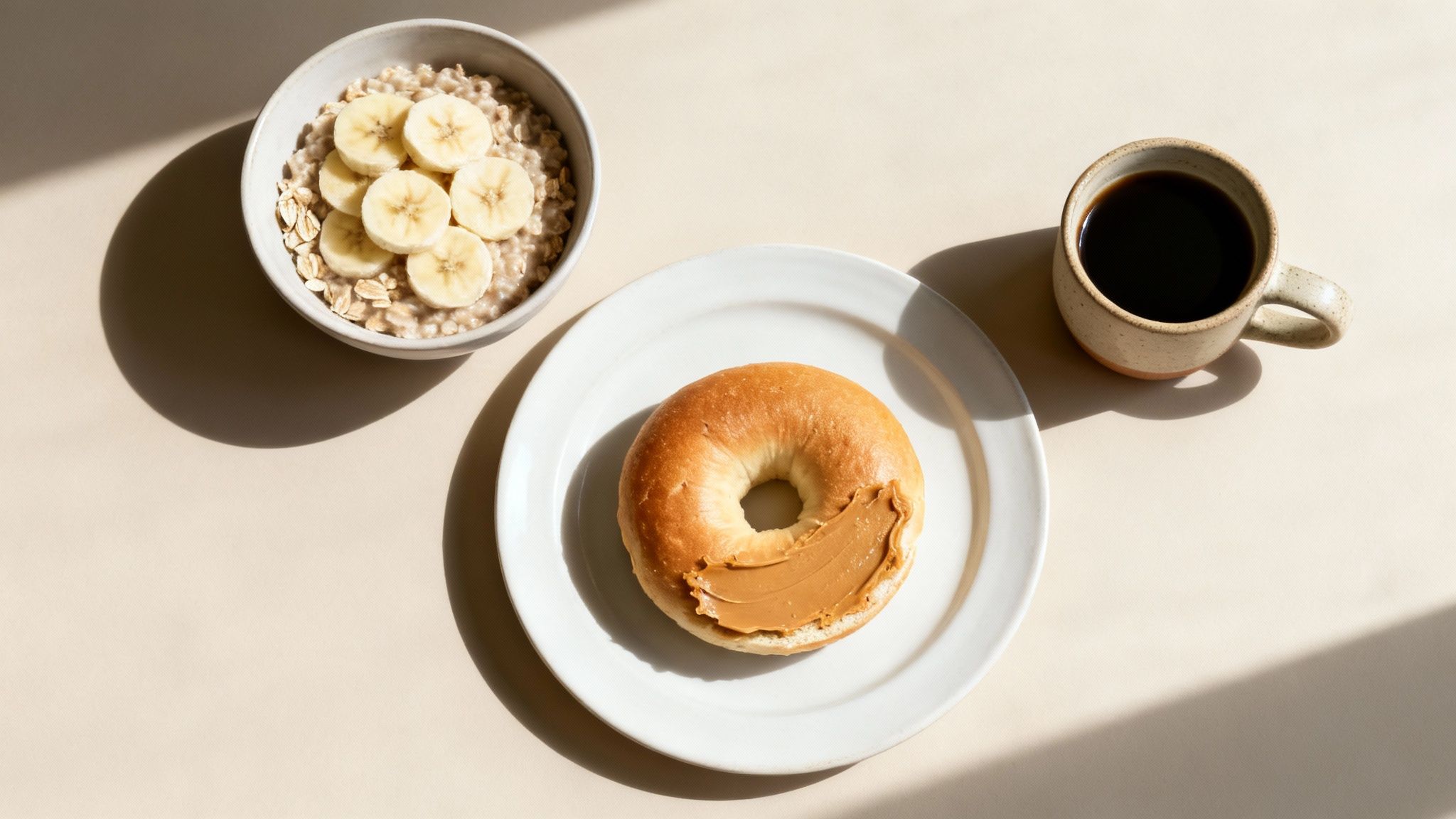
Timing is absolutely everything here. Eat too close to go-time, and you're asking for cramps and a sloshy stomach. Eat too early, and you might feel hungry again by the time you're in the starting corral. Hitting that 2-4 hour window gives your body plenty of time to digest and absorb the nutrients without weighing you down.
Crafting The Perfect Pre-Race Meal
My number one rule for race day: nothing new. Stick to the foods you've been eating before your long training runs. Your gut is a creature of habit, and race morning is not the time to surprise it.
Here are a few tried-and-true options that work for most runners:
- Oatmeal with Banana: This is a classic for a reason. Oats give you slow-release carbs, and the banana offers a quick hit of sugar and cramp-fighting potassium.
- Bagel with Peanut Butter: Go for a plain or white bagel for simple, easy-to-digest carbs. Just be sure to use a thin layer of peanut butter for a touch of protein without too much fat.
- Toast with Jam or Honey: Two slices of white toast are perfect. They provide quick energy without the heavy fiber that can cause digestive trouble mid-race.
- Low-Fiber Cereal: If you're a cereal person, a small bowl of something low-fiber and familiar can be a great choice.
Expert Tip: Aim for 1-4 grams of carbohydrates per kilogram of body weight for your pre-race meal. The exact amount depends on your personal tolerance and how much time you have. This strategy ensures your blood sugar and glycogen levels are primed for performance without risking GI distress.
To give you a quick reference, here’s a simple breakdown of how to approach your morning meal.
Race Morning Fuelling Quick Guide
| Time Before Race | Primary Goal | Food Focus | Example Meal |
|---|---|---|---|
| 3-4 Hours | Full glycogen top-off, complete digestion | Larger, balanced meal with plenty of complex carbs | Bowl of oatmeal with fruit, 2 slices of toast with honey |
| 2 Hours | Quick glycogen boost, easy digestion | Smaller portion, simple carbs | White bagel with a thin layer of peanut butter |
| 1 Hour | Fast-acting energy, very light on the stomach | Small snack, mostly simple sugars | A single banana or a handful of pretzels |
| 30 Mins or Less | Last-minute energy spike | Easily consumed liquid or gel | Sports drink or an energy gel with water |
This table is just a guide—always listen to your body and stick with what you’ve practiced.
Remember, this meal is the final touch on all the hard work you've put in. It perfectly complements your physical preparation. For a closer look at the training that gets you to the start line feeling strong, be sure to check out our complete guide on how to train for a 10k.
The 24-Hour Countdown to Race Day
Your race performance doesn't just happen on the morning of the event. It’s built on the choices you make in the full day leading up to it. How you fuel yourself in those crucial 24 hours is key to stocking your muscles with the glycogen they need to power you through the finish line.
Let's walk through a game plan to ensure you wake up on race morning feeling energized and ready to go, not sluggish or heavy.
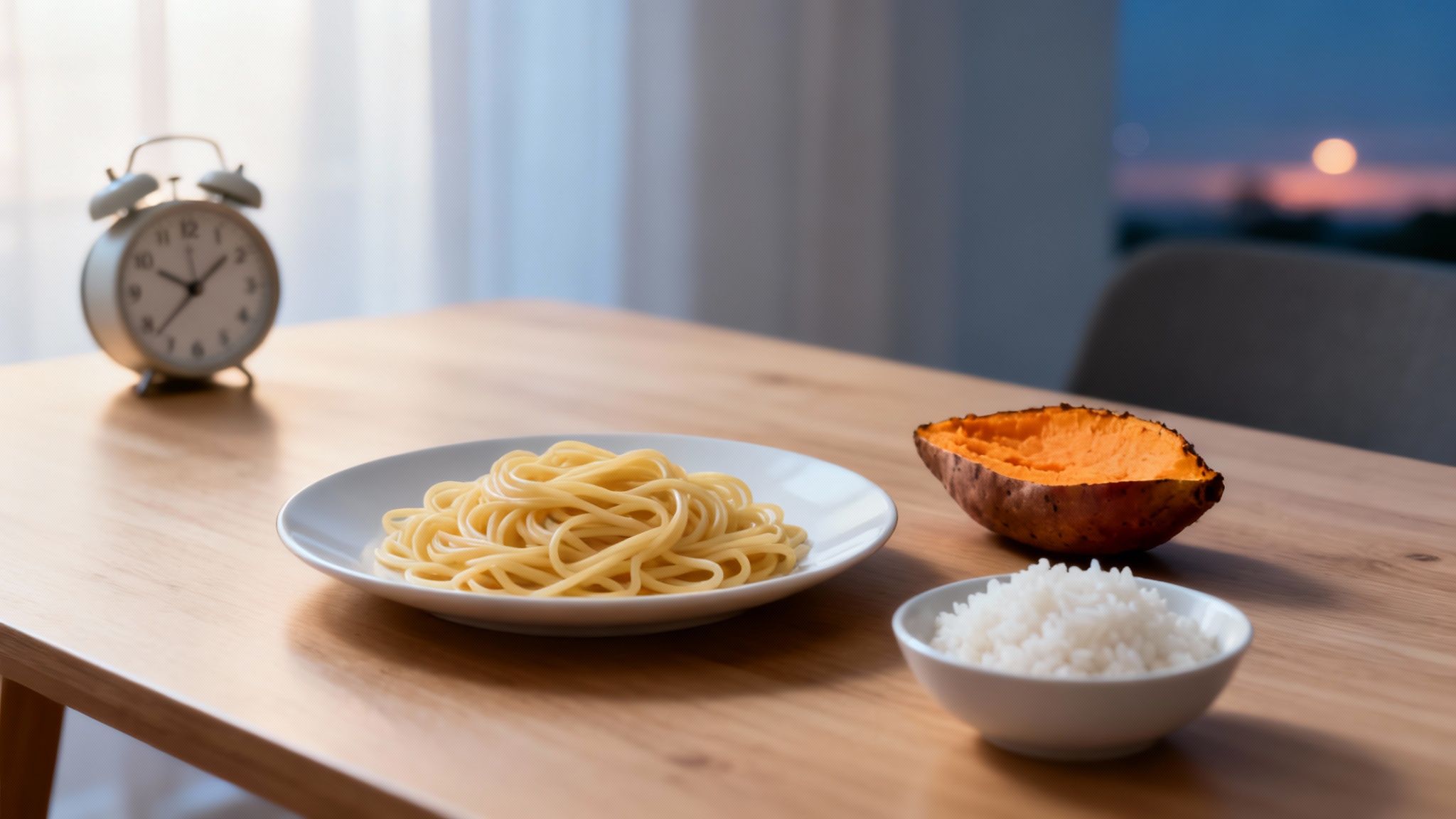
While a 10k doesn’t demand the intense, multi-day carb-loading you’d do for a marathon, the core idea is the same. You're aiming to gently increase your carbohydrate intake to make sure those energy stores are completely full. The goal is to feel powerful, not bloated.
Your Final Lunch and Dinner
The golden rule for the day before a race is deceptively simple: stick to familiar, easily digestible foods. Seriously, this is not the time to experiment with that new spicy noodle spot or a high-fiber bean chili you’ve never tried before. Think simple. Think bland.
Your final lunch and dinner should put carbohydrates front and center. Here are a few tried-and-true options that runners swear by:
- Pasta with a simple marinara sauce: Skip the heavy, creamy, or cheesy sauces. They're high in fat and can slow down your digestion.
- Grilled chicken or fish with a side of rice: A lean protein is perfectly fine, just make sure carbs are the star of the plate.
- A baked sweet potato: This is a fantastic complex carb that provides sustained energy and is generally very easy on the stomach.
The most common mistake I see runners make is either eating way too much the day before or choosing foods that are too fatty or fibrous. A large, greasy meal can sit like a rock in your stomach, disrupt your sleep, and leave you feeling awful on race morning.
If you like to get specific with numbers, many sports nutritionists recommend aiming for 6–8 grams of carbohydrate per kilogram of body weight in the 24 hours before a race. For a 70 kg (154 lb) runner, that’s about 420–560 grams of carbs spread throughout the day. You can find more great insights into pre-race carbohydrate strategies on highfive.co.uk.
And don't forget to hydrate! Keep sipping water all day long, but avoid chugging huge amounts at once. Consistency is what you're after.
Don't Forget Protein and Fats (But Get the Timing Right)
Carbohydrates are king on race day, but that doesn't mean protein and fat don't have a place. Think of them as the supporting actors in your fueling strategy. They're important, but they shouldn't steal the spotlight from the star of the show: carbs.
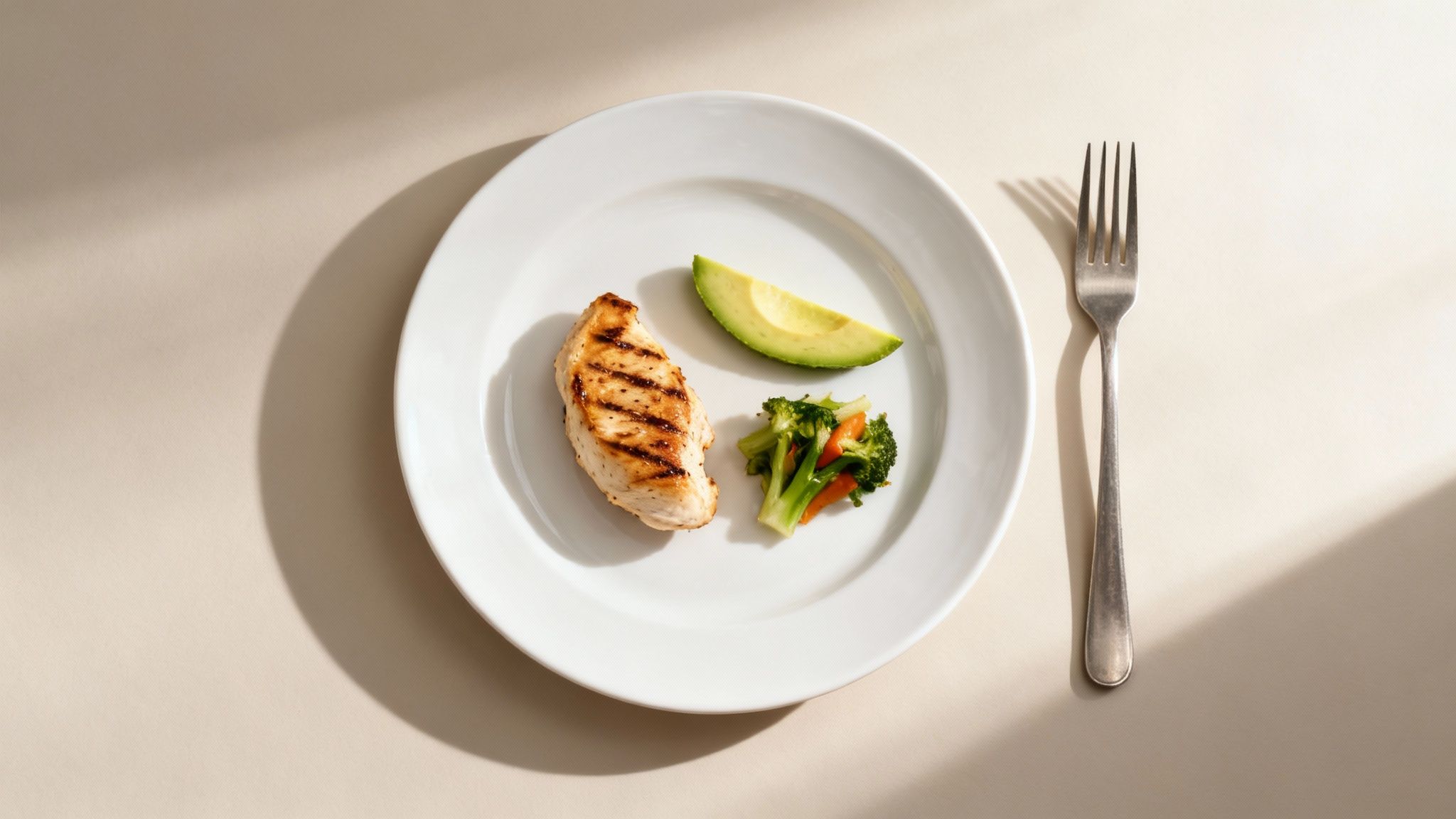
A little bit of lean protein is actually a great idea. It helps with muscle support and keeps you feeling satisfied, so you don't get that distracting rumble of hunger halfway through the race. We're talking small amounts, like a tablespoon of peanut butter on your toast or a small scoop of protein powder mixed into your morning oatmeal.
Where runners often get into trouble is with high-fat and high-fiber foods. These are almost always the culprits behind those dreaded side stitches, awful cramps, and the desperate search for a porta-potty mid-race.
The Foods to Avoid Before the Starting Gun
Keeping your stomach settled is all about making digestion as easy as possible for your body. This means you have to be really strategic about what you skip in the hours leading up to the race.
Here are some of the most common troublemakers:
- Creamy sauces and dressings: Think Alfredo sauce or a rich, creamy Caesar dressing. They are packed with fat.
- Fried foods: This is a big one. French fries, fried chicken, and donuts are a digestive nightmare before a run.
- Big, leafy salads: They're incredibly healthy, but the high fiber content can lead to serious bloating and gas.
- Too much dairy: A huge bowl of cheesy pasta or a big glass of whole milk can be a recipe for disaster for many runners.
The reason is simple: fat and fiber slow down how quickly your stomach empties. That means food just sits there, increasing your chances of GI issues once you start running. To play it safe, it's best to steer clear of high-fat foods in the 3–6 hours before your race starts. For a deeper dive into fueling, the Mayo Clinic Health System offers excellent fueling strategies for distance runners.
Learning to build a plate that’s heavy on simple carbs with just a touch of protein and fat is a skill you'll develop over time. Nailing this balance is what helps you cross the finish line feeling strong, which is a goal we're all chasing, whether we're running a steady 10-minute mile pace or pushing for a new personal best.
Mastering Your Race Day Hydration
We talk a lot about food, but proper fueling is a two-part equation. Hydration is the other, equally critical, half. Even slight dehydration can tank your performance, making a 10k feel like a marathon. The secret isn't chugging a bottle of water at the start line—it's arriving already hydrated.
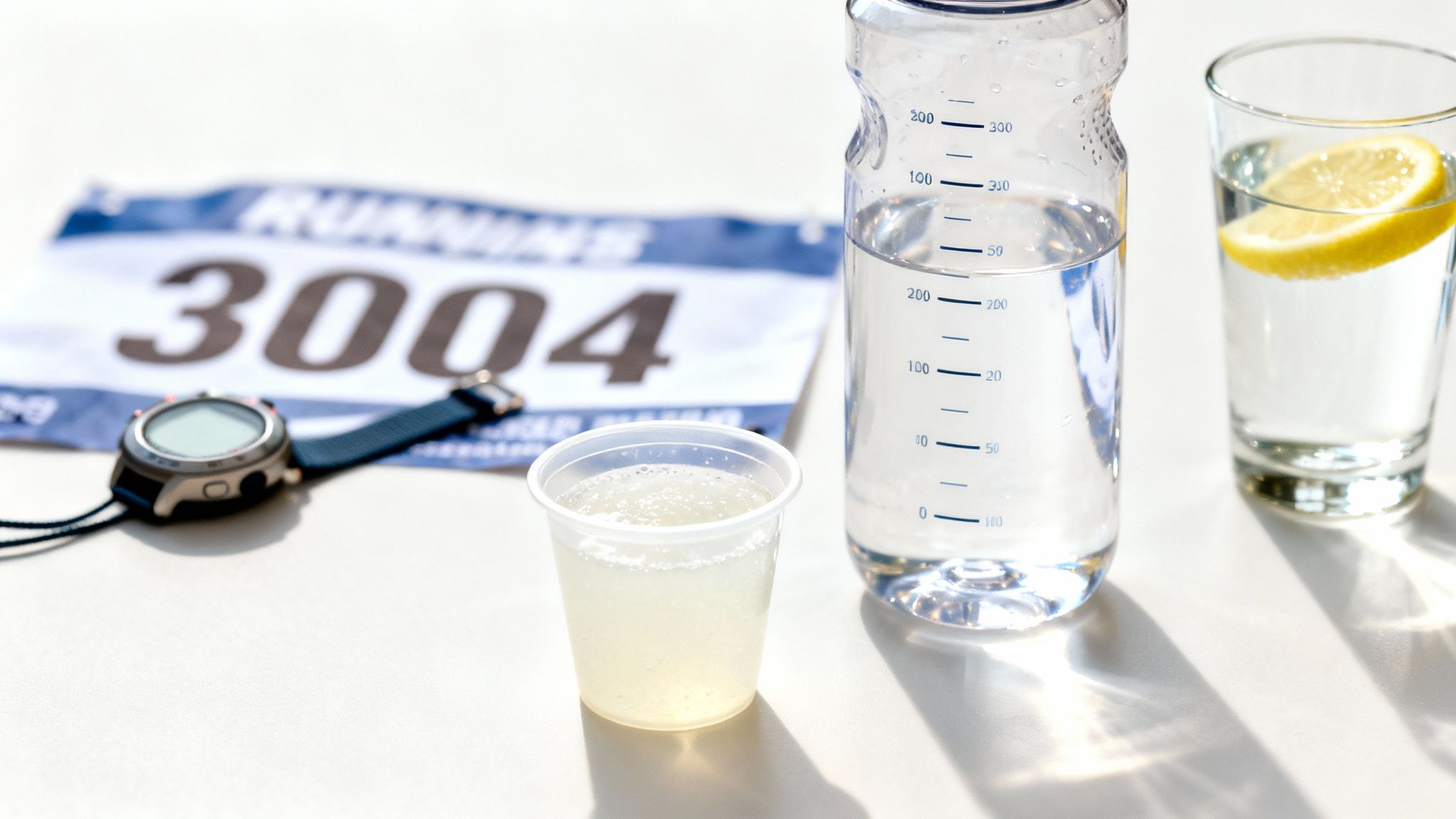
Your hydration plan really begins the day before the race. Make a point to carry a water bottle with you everywhere and sip consistently. Don't overdo it, just drink steadily. The old-school "pee test" is still the best way to check your status: you're looking for a pale, straw-like yellow. Anything darker is a clear sign you need to drink more.
Fine-Tuning Your Fluid Intake
On race morning, the goal is to top off your tank without feeling sloshy or needing a frantic porta-potty stop mid-race. It’s a delicate balance.
A solid guideline, backed by pre-exercise hydration research, is to drink 5–10 mL of fluid per kilogram of body weight in the 2 to 4 hours before the gun goes off.
Let's break that down for a 70 kg (154 lb) runner: that’s about 350–700 mL (or 12-24 oz) of fluid. If you wake up and notice your urine is still dark, you can add another 3–5 mL/kg (about 210–350 mL or 7-12 oz) in the final two hours.
The Electrolyte Factor: Remember, when you sweat, you're not just losing water—you're losing crucial electrolytes like sodium. If it’s a warm or humid race day, swapping some of your water for an electrolyte drink is a smart move.
Electrolytes help your body hold onto fluid more effectively and can be a game-changer for preventing cramps. Just remember the golden rule: Nothing new on race day. Test out any sports drinks during your training runs to make sure your stomach can handle them. Walking up to that start line properly hydrated will give you one less thing to worry about, letting you focus on running your best.
Common Fuelling Mistakes That Can Wreck Your Race
We’ve all been there. Or at least, we've all heard the horror stories. The pre-race meal that seemed like a great idea at the time but turned into a side-stitch nightmare halfway through the first mile.
The goal on race morning is simple: arrive at the start line feeling light, energized, and confident. Let's walk through the classic blunders I see all the time so you can sidestep them and have a great race.
The Race-Day Experiment
This is probably the biggest mistake a runner can make. You see a new, fancy-looking energy gel at the race expo or your friend swears by their "secret weapon" breakfast. Race day is not the time to try anything new. Period.
Your gut is a creature of habit. Stick to the exact foods, drinks, and gels that you've already tested and know work for you during your training runs. Save the experimenting for a low-stakes long run.
Bad Timing
Another classic error is eating too close to the start. Shoveling down a big breakfast an hour before the gun goes off is a recipe for disaster. Your body can't digest food and send oxygen to your muscles efficiently at the same time.
A real meal needs a good 2-4 hours to digest. Any closer, and you risk cramps, bloating, and that awful sloshing feeling.
The "Healthy Food" Trap
This one catches a lot of runners off guard. A high-fiber, whole-grain cereal with nuts and berries is fantastic on a normal day, but it’s a terrible idea before a 10k. The same goes for high-fat foods like bacon or a big avocado toast.
Fiber and fat are digestive slow-pokes. They take a long time to break down, which can lead to gas, bloating, and an urgent need for the porta-potty mid-race.
My golden rule for race morning: bland is your friend. Prioritize simple, easily digestible carbs. Think white toast instead of whole-wheat, a banana instead of an apple, and hold the heavy fats.
Here’s a quick rundown of the most common fuelling mistakes to watch out for:
- Eating Way Too Much: Overloading your stomach, even with "good" foods, will just leave you feeling heavy and sluggish.
- Forgetting to Hydrate Early: Hydration doesn't start on race morning; it starts the day before. Even a 2% drop in hydration can tank your performance.
- Trying Anything New: I'm repeating this because it's that important. This applies to coffee, sports drinks, gels—everything. If it wasn't in your training plan, it doesn't belong in your race plan.
Nailing your nutrition comes down to avoiding these simple, yet surprisingly common, mistakes. Get it right, and you're already halfway to a great race experience.
Answering Your Pre-10k Fueling Questions
Even the most meticulously planned nutrition strategy can leave you with nagging questions as the big day approaches. Let's walk through some of the most common "what ifs" I hear from runners so you can step up to the start line feeling completely prepared.
Do I Really Need Gels for a 10k?
For most of us, the short answer is no. If you’ve eaten well the day before and had a decent pre-race breakfast, your body has plenty of stored glycogen to get you through a race that's usually over in less than 90 minutes.
The exception? If you're a seasoned runner chasing a personal best, a single energy gel around the 45-minute mark might give you that extra mental and physical kick needed for a strong finish. But here's the golden rule: never, ever try anything new on race day. You absolutely must test gels on your tough training runs to make sure your stomach can handle them.
What if My Race Starts at the Crack of Dawn?
Waking up at 4 a.m. to force down a full meal is nobody's idea of a good time. When you're faced with an incredibly early start, the strategy shifts.
Aim for a smaller, simple, and quick-digesting carb snack about 60 to 90 minutes before the race. Think light and easy.
Some solid choices are:
- A banana
- Half of an energy bar you know and trust
- A couple of dates
- A single slice of white toast with a bit of jam
The key is just to top off your energy stores without weighing yourself down or upsetting your stomach when you have less time for digestion.
Honestly, the most critical thing is just getting something in the tank. Running on empty makes any effort feel ten times harder, no matter your pace. How you fuel directly impacts your finish time, whether you're aiming for the podium or just trying to beat the average 10k time.
Is My Morning Coffee a Go or a No-Go?
If a cup of coffee is an essential part of your morning ritual, then by all means, have it on race day. For regular drinkers, it's fine, and the caffeine might even give you a small performance edge.
Just be mindful that it can have, let's say, digestive consequences for some. If you don't normally drink coffee, race morning is definitely not the time to experiment. Stick to what your body knows.
Celebrate your incredible 10k achievement with a piece of art that tells your story. At RoutePrinter, we turn your hard-earned miles into beautiful, personalized race posters. Commemorate your finish time, see your route, and create a lasting memory of your accomplishment. Design your custom 10k poster today!