How to Train for a 10K - A Practical Guide for Every Runner

Training for a 10K isn't just about lacing up and hitting the pavement. It's a journey built on a smart plan that mixes easy runs, speed sessions, and long miles, all while gradually getting tougher over 8 to 12 weeks. Before you even think about your first workout, though, getting the right gear—especially a pair of well-fitted running shoes—and setting a clear, personal goal are the most important things you can do to stay motivated and avoid injury.
Building Your Foundation Before the First Mile

Laying a solid foundation before you log a single mile can be the difference between crossing the finish line with a smile and flaming out halfway through your training. So, first things first: what does success look like for you? Forget what everyone else is doing for a moment and decide on a personal goal.
Is your main objective just to finish the 6.2 miles without stopping? Or maybe you're chasing down a personal best? Knowing your "why" gives you a powerful anchor for those days when the motivation just isn't there. It's worth noting that a global analysis of over a million racers found the average 10K time is around 51 minutes for men and 54 minutes for women, which just goes to show that a structured plan helps people of all stripes succeed.
Setting a Realistic and Motivating Goal
Once you've got a general idea, it's time to get specific. A great goal is one that pushes you but is still within reach.
Here are a few ways to frame your target:
- The Completion Goal: This is perfect if it's your first 10K. The entire focus is simply on finishing the race feeling strong and, most importantly, injury-free.
- The Time-Based Goal: If you have some running under your belt, this is for you. Aiming for a sub-60 or even a sub-50 minute 10K adds an exciting competitive edge.
- The Performance Goal: More experienced runners might zero in on a specific pace per mile or even try to "negative split" the race by running the second half faster than the first.
Your goal will directly shape the intensity of your training plan, so be honest with yourself about your current fitness and how much time you can realistically dedicate to running each week.
The Four Pillars of a 10K Training Plan
No matter what your goal is, every solid training plan is built on the same four core principles. Think of them like the legs of a table—if you take one away, the whole thing gets wobbly. To become a well-rounded runner, you need a healthy mix of different types of workouts.
A classic mistake I see beginners make is running every single workout at the same comfortable, "in-the-middle" pace. Variety isn't just about keeping things interesting; it's the secret sauce for building speed, endurance, and resilience against injury.
These are the workouts that will become the backbone of your weekly schedule:
- Easy Runs: These will make up the bulk of your mileage. They should be done at a truly conversational pace and are essential for building your aerobic base and helping your body recover from tougher sessions.
- Speed Work: This is where the magic happens. Workouts like interval training or tempo runs teach your body to run faster and more efficiently. They’re tough, but they deliver huge fitness gains.
- Long Runs: Your weekly long, slow run is where you build both physical endurance and mental grit. This is arguably the most important workout to prepare your body and mind for the race distance.
- Rest and Recovery: You don't get stronger during the run; you get stronger when you rest and recover from it. Skipping rest days is a one-way ticket to injury and burnout. Active recovery, like gentle stretching or walking, counts too!
You can explore more running tips and stories over on our RoutePrinter insights blog.
10K Goal Time Paces Per Mile and Kilometer
To hit your time goal, you need to know the pace you have to maintain. It's one thing to say "I want to run a sub-50 minute 10K," but another to know that means holding a pace of 8:03 per mile. This table breaks down the required paces for common 10K finish times.
| Finish Goal | Pace per Mile | Pace per Kilometer |
|---|---|---|
| 60 Minutes | 9:40 | 6:00 |
| 55 Minutes | 8:51 | 5:30 |
| 50 Minutes | 8:03 | 5:00 |
| 45 Minutes | 7:15 | 4:30 |
| 40 Minutes | 6:26 | 4:00 |
Use this as a quick reference when planning your speed work and tempo runs. Knowing your numbers helps make your training more targeted and effective.
Building Your Weekly Training Rhythm
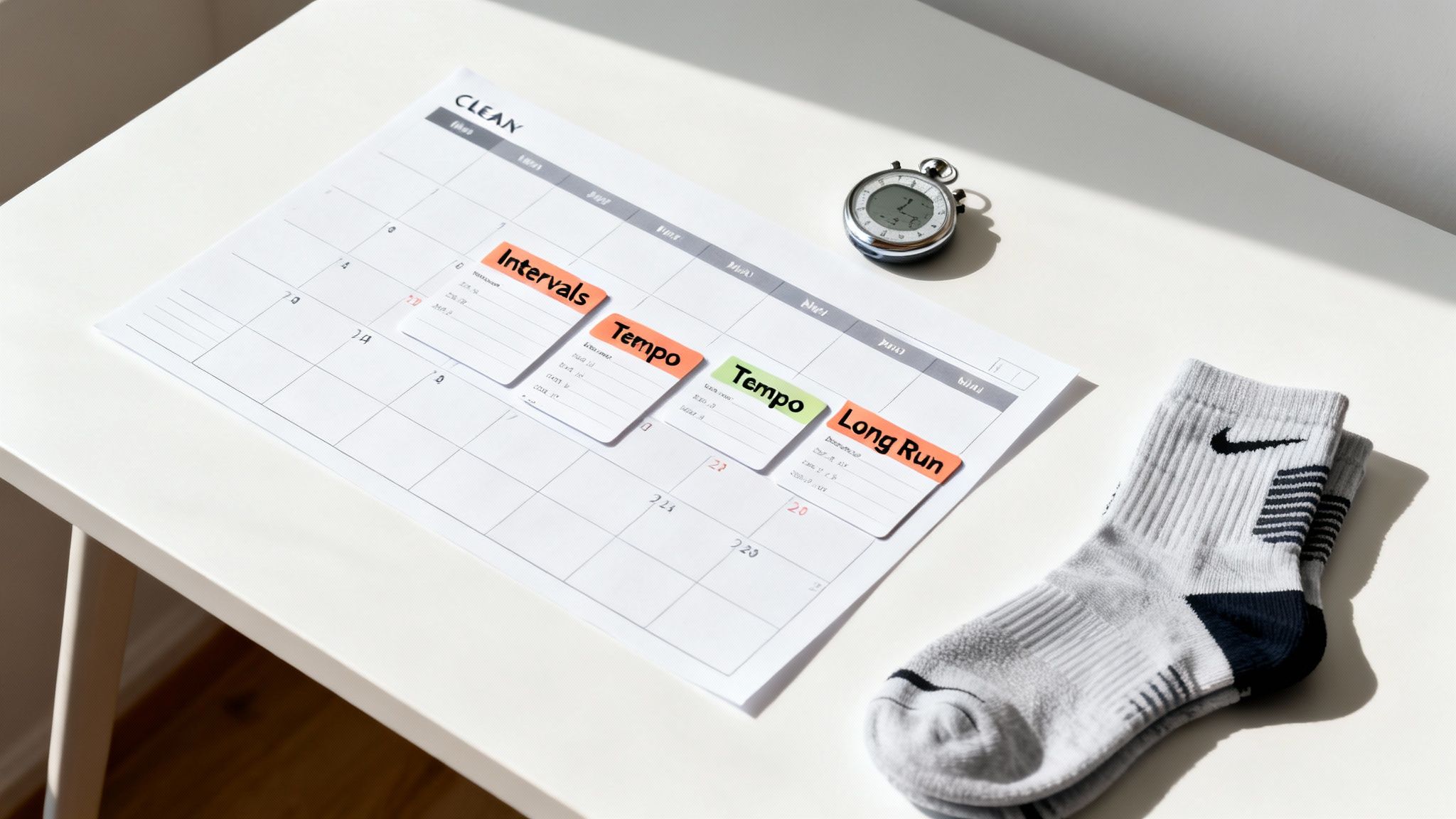
Consistency is everything when you're training for a race. The real secret is creating a smart weekly schedule that balances hard work with proper rest, letting you build fitness without hitting a wall. Your entire week should be built around three core workouts, each one designed to prepare you for the unique demands of a 6.2-mile race.
These three sessions—intervals, tempos, and long runs—are where the magic happens. Your easy runs build your foundation, but these workouts are what will get you faster, stronger, and truly ready for race day. Let’s dive into each one.
Interval Runs: The Speed Builder
Intervals are all about running short, intense bursts with recovery periods in between. This is how you sharpen your speed. These workouts boost your running economy and make your goal 10K pace feel much more comfortable when the time comes.
A great starting point for an interval session looks something like this:
- Warm-up: Start with 10-15 minutes of easy jogging.
- Main Set: Run 400 meters (one lap on a track) at a hard but controlled pace. Follow it up with 400 meters of walking or very slow jogging to recover.
- Reps: Do this 4 to 6 times.
- Cool-down: Finish with 10 minutes of easy jogging and some light stretching.
The point isn't to go into an all-out sprint. You're aiming for a pace that’s noticeably faster than your target 10K pace. As you progress, you can add more reps or trim down your recovery time.
Tempo Runs: The Pacing Pro
Tempo runs are where you find your "comfortably hard" gear. It’s that sweet spot where you're pushing yourself but can still hang on. This teaches your body to handle lactic acid better, which is the key to holding a faster pace for a longer period.
A standard tempo run is simple: warm up, run at tempo pace for a set block of time, then cool down. For instance, you might jog for 10 minutes, then run for 20 minutes at a pace you feel you could sustain for about an hour, and finish with a 10-minute cool-down jog. It should feel tough, but you shouldn't be gasping for breath.
The trick to a good tempo run is being honest with yourself. It's so easy to push too hard and turn it into a race. The real benefit comes from finding and holding that controlled, challenging effort for the whole time.
This workout is a game-changer, but keep in mind that everyone's "tempo" is different. For context, recreational male runners average around 5 minutes 51 seconds per kilometer in 10K races, while females average closer to 6 minutes 58 seconds per kilometer. Pacing is personal and depends on your current fitness and goals.
The Long Run: The Endurance Engine
Your weekly long run is your endurance foundation. This is a slow, steady effort that builds the physical and mental strength you need to go the distance. It’s not just about covering miles; it’s about improving your aerobic capacity and teaching your body to burn fat more efficiently for fuel.
The rule of thumb for a long run is to keep the pace conversational—if you can’t chat with a running buddy, you’re going too fast. This run is all about time on your feet, not speed.
For runners who get the bug and want to go even further, our guide on how to train for a marathon dives deeper into building serious endurance. But for the 10K, simply adding a little distance to your long run each week is the safest and most effective way to prepare.
Finding the Right 10K Training Plan for You
Choosing your training plan is one of the most important steps in your 10K journey. Let’s be honest, a generic, one-size-fits-all schedule is a recipe for frustration or injury. The right plan for you needs to meet you where you are right now, align with what you want to achieve, and actually fit into your real life.
Below, we’ll walk through three different 8-week plans tailored for runners at various stages. Whether this is your very first 10K or you're looking to shave minutes off your personal best, there's a structured approach here to get you to the starting line prepared and confident.
The Beginner 10K Plan: Finish Strong
If you're new to the sport or just making the leap to the 10K distance, this plan is your perfect starting point. The goal here isn't about speed; it's about building a solid aerobic base safely and consistently. We want you to arrive at the starting line healthy and excited, knowing you have the endurance to cross that finish line with a smile.
The secret sauce for this plan is the run/walk method. It’s a tried-and-true strategy that has helped countless runners. By alternating between running and walking, you manage fatigue, slash your injury risk, and build stamina without pushing your body into the red zone.
A typical week looks something like this:
- 3 running days: You'll focus on run/walk intervals, gradually extending the running segments as you get stronger.
- 1-2 cross-training days: Think swimming, cycling, or even a brisk walk. This builds your engine without the pounding of running.
- 2-3 rest days: These aren't optional! This is when the magic happens—your muscles repair and get stronger.
Your weekend long run will progress steadily, starting around 2 miles and building up to 6 miles by the time you're done with the plan. You'll be more than ready.
The Intermediate 10K Plan: Set a New PR
Already have a few 10Ks in your race log? If you can comfortably run for 30-40 minutes and are hungry for a faster time, this is your plan. It’s designed to introduce more specific, challenging workouts that will help you smash your old personal record.
Here, we start layering in those tempo and interval workouts we covered earlier. These aren't just about running harder; they’re about running smarter. Tempo runs push your lactate threshold, and intervals boost your top-end speed. Both are essential for getting faster over a 6.2-mile distance.
The biggest mindset shift from a beginner to an intermediate runner is getting comfortable with being uncomfortable. Tempo runs and interval sessions aren't supposed to feel like a walk in the park. That controlled, challenging effort is exactly where you'll find your next gear.
Your weekly schedule will be a bit more packed:
- 4-5 running days: This includes one interval day, one tempo run, a long run, and one or two easy, conversational-pace runs.
- 1 cross-training day: This helps you stay aerobically fit while giving those hard-working running muscles a well-deserved break.
- 1-2 rest days: With higher intensity comes a greater need for recovery. Don't skip these.
The Advanced 10K Plan: Peak Performance
For experienced runners chasing a competitive time, this plan dials up both the intensity and the mileage. It's built for those who already have a strong running base and are no strangers to structured speed work.
You can expect higher weekly mileage, more complex workouts, and a sharper focus on dialing in your specific race pace. Workouts get tougher, incorporating longer tempo runs, challenging interval sets like Yasso 800s, or long runs that include sections at your goal 10K pace to simulate race-day conditions.
Even at this level, listening to your body is paramount. Pushing your limits means walking a fine line, and smart recovery is just as crucial as the hard training sessions. Overtraining is a real risk, so rest days are sacred.
Overview of Training Plans by Runner Level
To help you visualize how these plans differ, here's a quick comparison of the weekly structure and key workouts for each level. This should make it easier to see where you fit in and what to expect from each approach.
| Runner Level | Weekly Runs | Key Workouts | Weekly Mileage Goal |
|---|---|---|---|
| Beginner | 3 days | Run/Walk Intervals, Easy Runs | 10-15 miles |
| Intermediate | 4-5 days | Tempo Runs, Interval Training, Long Run | 20-30 miles |
| Advanced | 5-6 days | Race-Pace Workouts, Hill Repeats, Long Run | 35-45+ miles |
Ultimately, the best plan is the one you can stick with consistently. Take an honest look at your current fitness, your goals, and your schedule, and choose the path that feels both challenging and achievable.
Building a Runner's Body to Prevent Injury

Let’s be honest: pounding the pavement puts a lot of stress on your body. Becoming a better runner isn't just about logging more miles—it's about building a body that can handle the work. Think of it as constructing a more resilient frame, one that’s your best defense against those all-too-common issues like shin splints and runner's knee.
This is where strength and recovery come into play. They aren't optional extras; they're the foundation of any solid training plan.
Essential Strength Exercises for Runners
Forget spending hours in the gym trying to become a bodybuilder. We're talking about targeted, functional strength work. Just two 20–30 minute sessions a week can be a total game-changer, improving your stability, power, and overall running efficiency.
Focus on simple, compound movements that fire up the muscles that do all the work when you run: your glutes, core, and legs.
Here are a few of the most effective exercises you can do:
- Squats: The classic for a reason. Squats build all-around strength in your quads, hamstrings, and glutes—the engine of your running stride.
- Glute Bridges: Strong glutes are a runner’s secret weapon. They stabilize your pelvis and give you that powerful push-off. This exercise hits them directly.
- Planks: Your core is the chassis of your running form. Planks build the deep abdominal strength you need to hold everything together, especially when fatigue sets in.
- Lunges: This single-leg movement is fantastic for improving balance and stability. It mimics the motion of running and helps iron out any muscle imbalances between your legs.
The Art of Smart Recovery
Here’s a hard truth: you don't get stronger during your runs. The magic happens when you recover from them. Blowing off recovery is the fastest ticket to injury or burnout, making it an absolutely non-negotiable part of your 10K training.
And you’re not alone in this effort. In 2018, over 1.8 million people ran 10K races across the globe. With average finish times hovering around 60 minutes for men and 74 minutes for women, a huge number of people are pushing their limits—making smart recovery essential for everyone.
Listening to your body is a skill you learn with experience. A bit of muscle soreness is totally normal, but sharp, nagging pain is a warning sign. Ignoring those signals is a rookie mistake that can put you on the sidelines for weeks.
Make these recovery methods a priority:
- Stretch After Your Run: Once your muscles are warm, spend 5–10 minutes on some gentle static stretches. Pay close attention to your calves, hamstrings, quads, and hip flexors.
- Get Friendly with a Foam Roller: Think of it as a deep-tissue massage you can give yourself. It helps work out muscle knots, improve blood flow, and ease that post-run soreness.
- Prioritize Sleep: This is the ultimate performance enhancer. Aim for 7–9 hours a night. It’s when your body does the heavy lifting of repairing muscle tissue and locking in all your hard work. For athletes tackling even bigger goals, a formal recovery protocol is critical, something we detail in our Ironman training plan.
Your Game Plan for a Perfect Race Day
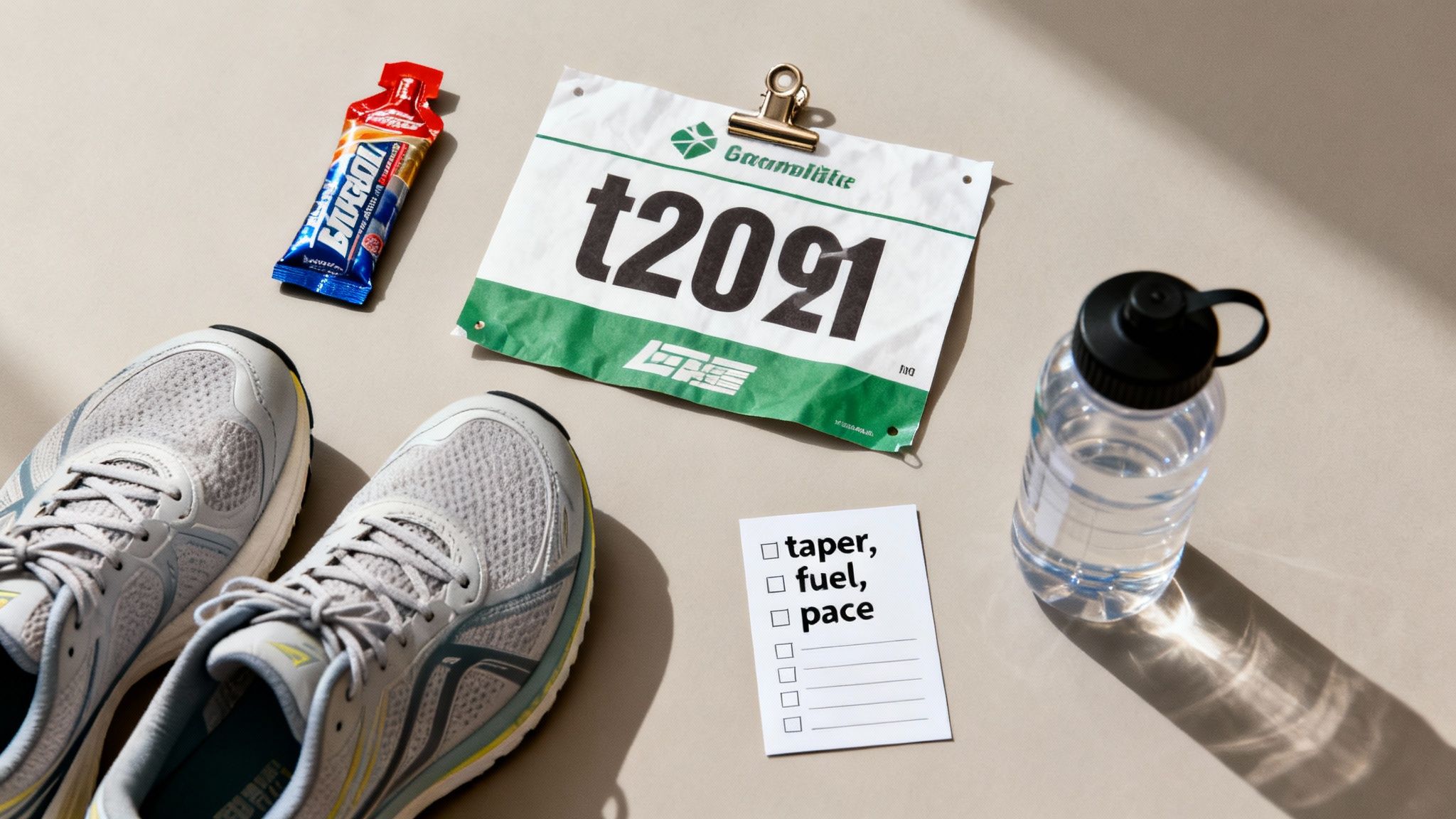
The weeks of hard work are in the bank. Now, it's all about arriving at the starting line feeling fresh, fueled, and ready to go. The final week isn't about cramming in more fitness; it’s about letting all that training sink in so you can be at your absolute best.
This all starts with the taper. This is where you intentionally dial back your training volume in the 7-10 days right before the race. It can feel a little weird to run less when you're so close to your goal, but trust me, this is the secret sauce for a great performance. By cutting your weekly mileage by 40-50%, you give your muscles a chance to fully repair, top up their energy stores, and shake off any deep-down fatigue.
Think of it this way: you’ve spent weeks putting money in the fitness bank. The taper is when you finally get to cash it all in.
Fueling for the Finish Line
What you eat and drink in the 24-48 hours before your 10K can make or break your race. The goal is simple: fill up your energy tanks without upsetting your stomach. This is not the time to experiment with new foods or fancy energy products. Stick to the tried and true.
Here’s a simple checklist for locking in your pre-race fuel:
- The Night Before: Have a familiar, carb-heavy meal. We're talking pasta, rice, or potatoes with a bit of lean protein. Steer clear of anything too fatty, spicy, or loaded with fiber that could cause you trouble on race day.
- Race Morning: Eat a small, easily digestible breakfast about 2-3 hours before the gun goes off. A bagel with peanut butter, a banana, or a bowl of oatmeal are all classic, reliable choices.
- Hydration is Key: Sip water consistently the day before the race. On race morning, have a glass when you wake up, but don't chug a huge bottle right before you head to the start line.
Your last long run is the perfect dress rehearsal for race day. Use it to test out your planned pre-race dinner and your morning-of breakfast. It's much better to discover a certain food doesn't sit well during a training run than at mile two of your goal race.
Pacing and Mental Strategy
The energy at the starting line is electric. It's so easy to get swept up in the adrenaline and go out way too fast. That initial burst of speed feels great for a minute, but it will come back to haunt you in the later miles. A smart race is an even race.
Try to run the first mile just a touch slower than your goal pace. Use it as a warm-up to settle into a rhythm and find your groove. From there, focus on maintaining a steady effort.
A great mental trick is to break the race into smaller, manageable pieces. Instead of obsessing over the full 6.2 miles, just focus on getting to the next mile marker, the next aid station, or even the next lamp post.
When it starts to feel tough—and it will—remember why you started. Think back on all the training runs you pushed through to get here. You’ve done the work. You are ready for this.
After you cross that finish line, take a moment to soak it all in. Walk around, grab some water, and do some light stretching. Your body just did something amazing, and now it’s time to kickstart the recovery process and think about how you’ll commemorate this huge accomplishment.
Got 10K Training Questions? We’ve Got Answers.
As you get deeper into your 10K training, you're bound to have some questions. It’s totally normal. Getting solid answers is key to staying confident and motivated. Let's dig into a few of the most common things runners ask.
How Many Days a Week Should I Run?
For most people just starting out, running three to four days a week is the sweet spot. This schedule gives your body enough time to recover between runs, which is when the real magic—getting stronger—happens.
A great weekly setup would be one long run, a couple of easy, shorter runs, and maybe a day for some faster work like intervals once you feel ready.
Seasoned runners might bump that up to five or even six days a week. But no matter your experience level, the golden rule is always the same: balance your hard work with real rest. That’s the secret to improving without getting hurt.
What Happens If I Miss a Run?
First off, don't sweat it. Life gets in the way sometimes, and missing one run isn't going to wreck your whole plan. Whether you were swamped at work or your body was just begging for an extra rest day, it’s okay.
The biggest mistake you can make is trying to cram two runs into one day or skipping a rest day to "catch up." Just pick up your schedule where you left off.
If you miss a full week because you were sick, be smart about it. Ease back into your runs gradually instead of jumping right back into the most intense workout on your plan. Consistency over the long haul beats perfection every time.
A missed run isn’t a failure. Think of it as your body or your schedule sending you a message. Smart runners listen and adapt.
Is It Okay to Walk During the Race?
Absolutely! There’s no rule that says you have to run every single step of the 6.2 miles. In fact, a run-walk strategy is a really smart and effective way to tackle a 10K, especially if it’s your first one.
Building in planned walk breaks from the start helps you manage your energy, lowers your risk of injury, and can actually help you post a faster overall time than if you tried to run the whole thing and faded at the end. The goal is to cross that finish line feeling strong, and a run-walk approach is a fantastic way to do it.
You put in the miles, you pushed through the training, and you crossed that finish line. That’s a massive accomplishment worth celebrating.
At RoutePrinter, we help you capture that moment forever. We turn your race day success into a beautiful, personalized piece of art. Get a custom print of your 10K route, complete with your name, date, and finish time. It’s the perfect reminder of your hard work and an amazing story to hang on your wall.
Design your custom race map and keep the memory alive.