Pushing the Limits: 8 Races That Define the Hardest Marathon in the World

The standard 26.2-mile marathon is a monumental test of human endurance. For a select group of athletes, however, running on flat pavement is merely a starting point. These individuals actively seek out races that push the absolute boundaries of physical and mental fortitude, events where simply crossing the finish line is a victory of unimaginable proportions. This is the domain of what many call the hardest marathon in the world, a title contended by numerous global events that feature punishing elevation, extreme weather, technically demanding terrain, and relentless psychological challenges.
This article moves beyond the typical road race to explore the world's most formidable endurance challenges. We will dissect eight legendary races, from the scorching heat of Death Valley to the thin air of the Himalayas, each with a legitimate claim to being the toughest. For each event, we will break down the specific factors that contribute to its brutal reputation, including:
- Extreme Environments: Analyzing the impact of desert heat, arctic cold, and high-altitude conditions.
- Brutal Terrain: Examining courses that traverse mountain ranges, dense jungles, and unforgiving deserts.
- Unforgiving Logistics: Highlighting the challenges of self-supported stages, strict cutoff times, and low finisher rates.
We will provide a comprehensive profile of each race, detailing its history, course, and what makes it a life-altering achievement. We will also offer practical, actionable insights into the specific training, gear, and mental preparation required to even attempt such an undertaking. Whether you are an aspiring ultrarunner looking for your next challenge or an admirer of extreme human achievement, this guide will introduce you to the races that redefine what is possible.
1. Badwater 135 – Death Valley, California
Often cited as the "world's toughest foot race," the Badwater 135 is not merely a marathon but an ultramarathon that pushes the absolute limits of human endurance. This legendary 135-mile (217 km) race starts at Badwater Basin, the lowest elevation in North America at -282 feet (-86m), and culminates at Whitney Portal, the trailhead to Mount Whitney, sitting at 8,300 feet (2,530m). The race takes place in mid-July, when Death Valley temperatures can soar above 130°F (54°C), making it one of the most extreme endurance challenges on the planet.
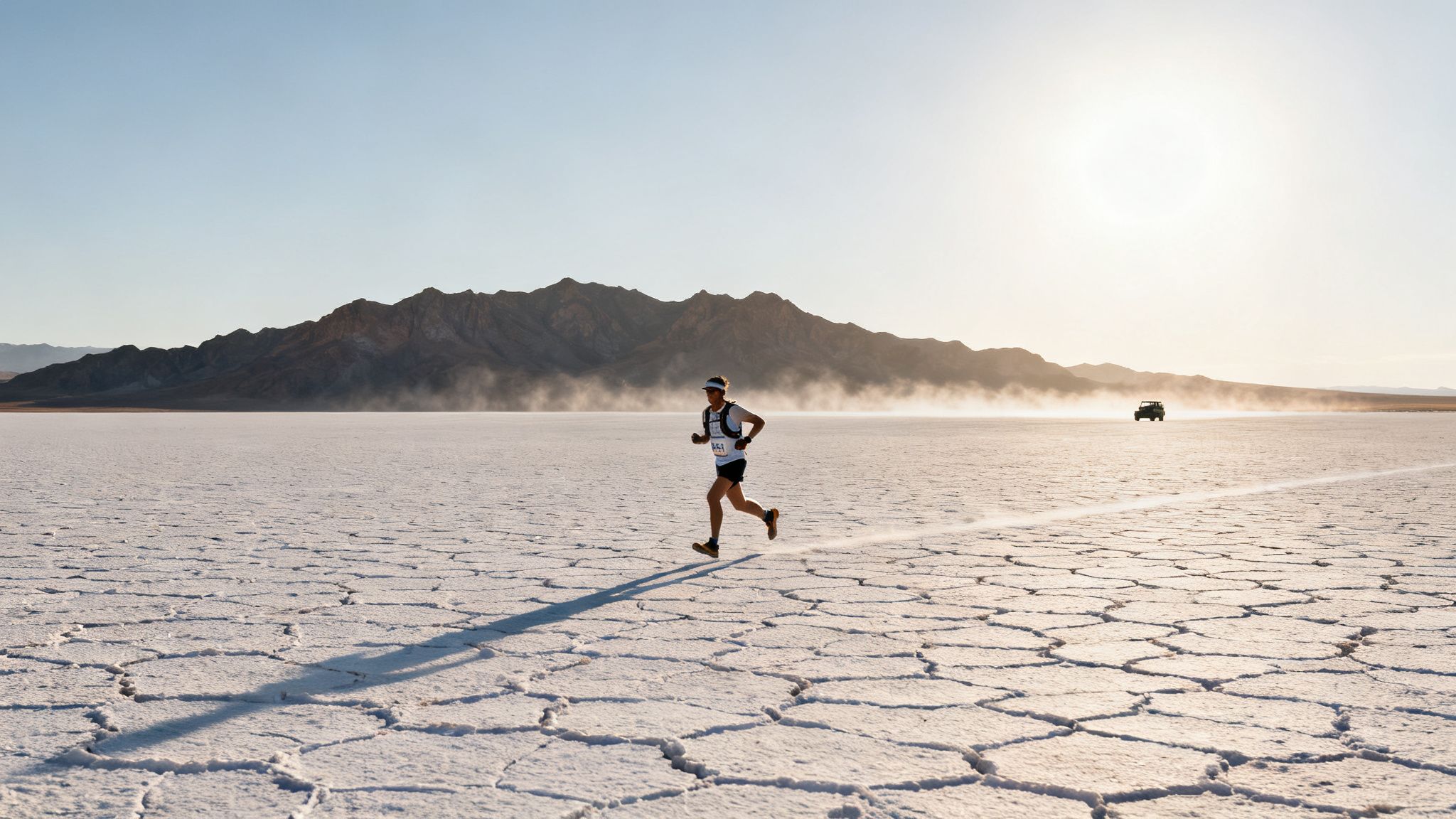
The combination of crippling heat, a relentless 48-hour cutoff time, and a cumulative vertical ascent of 14,600 feet (4,450m) makes this race a true test of physical and mental fortitude. It’s an invitational-only event, attracting elite ultrarunners who have proven their mettle in other extreme races. Legends of the sport, such as Marshall Ulrich and Scott Jurek, have cemented their legacies on this unforgiving pavement.
Tackling the Beast: Training and Strategy
Success at Badwater 135 requires meticulous, long-term preparation that goes far beyond standard marathon training. It's an undertaking that demands respect for the environment and a deep understanding of one's own physical limits.
- Heat Acclimatization: Begin training in hot conditions 12-18 months in advance. This often involves sauna sessions or running in heated rooms to simulate the extreme temperatures of Death Valley.
- Crew and Support: A knowledgeable and experienced support crew is mandatory. They are responsible for pacing, hydration, nutrition, and medical monitoring. Their expertise is as critical as the runner's fitness.
- Fueling for Extremes: Work with a nutritionist to develop a fueling and hydration plan that can withstand the severe conditions. Test all gels, foods, and electrolyte mixes during long, hot training runs to prevent gastrointestinal distress.
- Mental Fortitude: The race is as much a mental battle as a physical one. Visualizing the course, breaking it into manageable segments, and preparing for the inevitable low points are essential components of training.
The Badwater 135 is the ultimate challenge for ultrarunners seeking to discover their absolute limits. Building the necessary physical foundation is paramount, so if you're inspired by this monumental race, you can learn more about how to improve running endurance to start your own journey.
2. Marathon des Sables – Sahara Desert, Morocco
Known as the "Marathon of the Sands," this grueling multi-day ultramarathon is a legendary test of self-sufficiency and resilience. The Marathon des Sables (MDS) is a six-day, 156-mile (approx. 250 km) journey across the formidable Sahara Desert in southern Morocco. Competitors must carry everything they need to survive on their backs, including food, clothing, and a sleeping bag, with only water and a communal tent provided at daily checkpoints. This race is not just one of the hardest marathons in the world; it's a profound adventure into isolation and endurance.
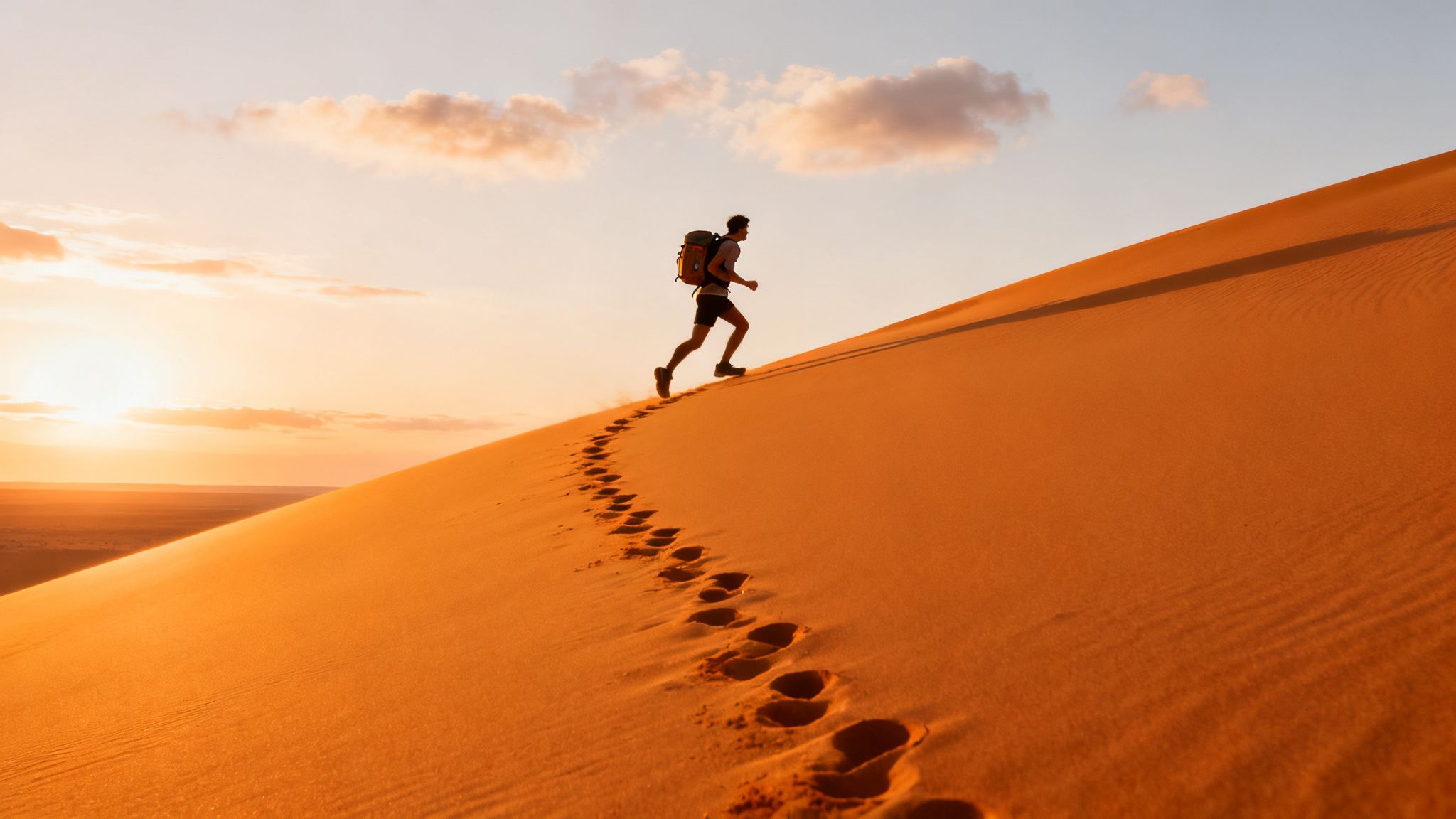
The challenge is defined by its relentless terrain, which includes vast sand dunes, rocky jebels, and sun-baked salt flats. With daytime temperatures frequently exceeding 120°F (49°C), the MDS pushes participants to their physical and mental breaking points. Since its inception in 1986, it has attracted ultrarunning icons like Michael Wardian and adventurers such as Charlie Engle, who use the extreme platform to champion their causes. Finishing is a life-altering accomplishment.
Tackling the Beast: Training and Strategy
Success at the Marathon des Sables hinges on meticulous planning, specialized training, and an unwavering spirit. Preparing for this race means becoming an expert in desert survival as much as a world-class runner.
- Weighted Pack Training: The single most critical training adaptation is running with a weighted backpack (10-15 lbs). Start this 12-16 weeks before the event to build specific strength in your back, shoulders, and core.
- Desert-Specific Skills: Practice running on sand to strengthen ankles and refine your technique. Heat management is crucial, so train in hot conditions to understand your body's response. Basic navigation skills are also essential, although the course is marked.
- Gear and Nutrition Dialed In: Every ounce matters. Test all your lightweight gear, from your sleeping bag to your stove, in training. Your footwear must be optimized to prevent sand abrasion. Equally important is your nutrition; you can discover expert tips on how to fuel during a marathon to build a plan that works for you under extreme stress.
- Mental and Social Preparation: Prepare for the psychological toll of multi-day fatigue and isolation. Connect with past finishers through online forums to gain invaluable insights into course strategy, gear choices, and mental coping mechanisms.
The Marathon des Sables is an ultimate pilgrimage for the endurance athlete, offering a unique blend of extreme physical challenge and stunning, desolate beauty.
3. Western States 100 – Sierra Nevada Mountains, California
As America's oldest and most prestigious 100-mile trail race, the Western States 100-Mile Endurance Run is a monumental challenge that defines the sport of ultrarunning. This iconic point-to-point race traverses the historic Western States Trail, starting in Olympic Valley, California, and finishing 100.2 miles later in Auburn. Held annually in late June, the course features a staggering 18,000 feet of ascent and nearly 23,000 feet of descent, making it a true test of grit and resilience.
The race takes runners through the high country of the Sierra Nevada mountains before descending into deep, hot canyons where temperatures can exceed 100°F (38°C). A strict 30-hour cutoff and a notoriously difficult lottery system add to its legendary status, making just getting to the start line an achievement. The race was born in 1974 when Gordy Ainsleigh ran the course of the Tevis Cup horse race, proving it could be done on foot. His feat inspired a generation, and legends like Ann Trason have since carved their names into its history.
Tackling the Beast: Training and Strategy
Earning the coveted silver buckle (for a sub-24-hour finish) or bronze buckle (for finishing under 30 hours) requires a strategic and disciplined approach. Preparation for Western States is a multi-year commitment that tests every aspect of a runner's ability.
- Mountain and Trail Fitness: Dedicate 8-12 months to building a strong foundation in mountain running. Focus on high-elevation training and long runs of 40-80 miles on technical terrain that mimics the course.
- Downhill Running Technique: The race's massive descent can destroy quadriceps. Practice and perfect your downhill running form to minimize impact and preserve your legs for the final miles.
- Course Familiarity and Crew: Study the course map in detail and, if possible, run key sections during training camps. A well-prepared crew is essential for managing aid station transitions, pacing, and providing crucial support through the race's toughest moments.
- Gear and Heat Management: Test all your gear, from shoes to hydration packs, in variable weather and at high elevations. Develop a heat management strategy that includes ice, proper hydration, and electrolyte intake to survive the infamous canyons.
4. Everest Marathon – Mount Everest, Nepal
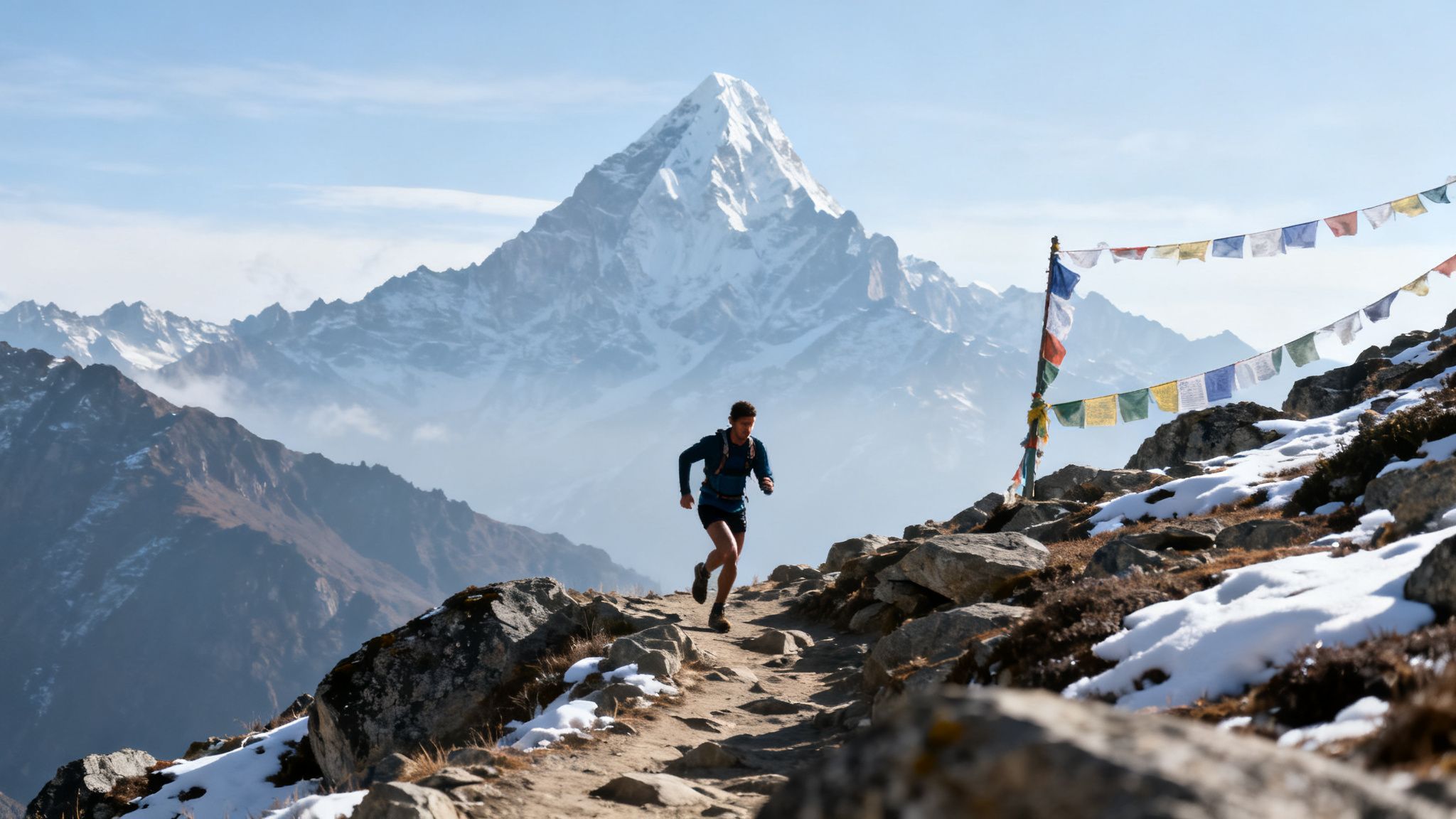
Claiming the title of the world's highest marathon, the Everest Marathon is an unparalleled fusion of high-altitude mountaineering and endurance running. The race begins at Gorak Shep, a staggering 17,575 feet (5,356m) above sea level, near the iconic Mount Everest Base Camp. From there, runners descend through the Himalayas to finish in Namche Bazaar at 11,300 feet (3,440m). The event, held annually in late November, presents a unique set of challenges where extreme cold, thin air, and treacherous terrain make it one of the hardest marathons in the world.
This 26.2-mile course is not just a test of running fitness but a comprehensive examination of an athlete's ability to adapt to severe environmental stress. The significant elevation loss is deceptive, as the route is interspersed with demanding ascents and technical trails covered in rock, scree, and ice. Athletes like Katsusuke Yanagisawa, who has completed the race multiple times, demonstrate the unique blend of trail running skill and mountaineering grit required to succeed here.
Tackling the Beast: Training and Strategy
Preparing for the Everest Marathon requires a specialized approach that prioritizes altitude acclimatization and technical trail skills over sheer running speed. Success is defined by careful planning and profound respect for the Himalayan environment.
- Altitude Acclimatization: This is non-negotiable. Runners must arrive in Nepal several days, if not weeks, early to trek to the starting line, allowing their bodies to gradually adapt to the thin air. Prior high-altitude trekking experience, such as climbing Kilimanjaro, is highly recommended.
- Technical Downhill Running: The majority of the course is downhill, but on unstable terrain. Training should include extensive practice on steep, technical descents to build quad strength and improve footing. Mastering the ability to "float" over rocks is crucial.
- Medical Preparedness: Consult with a sports medicine physician to create a strategy for mitigating altitude sickness. Understand the symptoms of Acute Mountain Sickness (AMS), HAPE, and HACE, and be prepared to act on them immediately.
- Gear for the Extremes: Your gear is your lifeline. Test all equipment, especially layered clothing, gloves, and traction devices for your shoes, in harsh winter conditions. Nothing should be new on race day.
5. Hardrock 100 – San Juan Mountains, Colorado
Regarded by many as the most technically demanding 100-mile ultramarathon in North America, the Hardrock 100 is a brutal and beautiful loop through the formidable San Juan Mountains of Colorado. This is not a race for the faint of heart; it’s a postgraduate course in mountain running. The course, which alternates direction each year, features an astounding 33,050 feet (10,074m) of cumulative vertical gain and descent, with an average elevation well over 11,000 feet (3,350m).
The challenges are relentless: severe altitude, treacherous terrain including scree fields and river crossings, and notoriously unpredictable weather that can shift from scorching sun to freezing hail and thunderstorms in minutes. The 48-hour cutoff is unforgiving, and entry is determined by a lottery so competitive it often takes years to gain a spot. Finishing is a monumental achievement, celebrated by kissing the iconic "Hardrock," a painted ram's head on a rock. Legends like Karl "Speedgoat" Meltzer have defined their careers here.
Tackling the Beast: Training and Strategy
Success at Hardrock requires a unique blend of endurance, technical skill, and mountain sense. Preparation is a multi-year commitment that goes far beyond simply logging miles, focusing on becoming a true master of high-altitude, rugged environments.
- Master the Mountains: Dedicate 12-16 months to specific training on steep, technical, and rocky trails. Practice scrambling and become comfortable with exposure on high ridges.
- Altitude Acclimatization: Build a massive aerobic base at elevation. Whenever possible, train in the mountains to adapt your body to the oxygen-deprived air. Arrive in the San Juans weeks before the race if possible.
- Course Reconnaissance: Study topographic maps obsessively until you know every climb and descent. Pre-running key sections of the course is invaluable for both physical and mental preparation.
- Weather and Gear Wisdom: Develop a keen ability to assess changing weather patterns. Your gear choices, particularly for rain, wind, and cold, are critical for safety and success. Carry all mandatory gear and know how to use it.
6. Comrades Marathon – South Africa
Known as "The Ultimate Human Race," the Comrades Marathon is the world's oldest and largest ultramarathon. This iconic 89-kilometer (approximately 55-mile) race takes place annually between the South African cities of Pietermaritzburg and Durban, with the direction alternating each year. Founded in 1921 as a living memorial to the soldiers who died in World War I, Comrades has grown into a national treasure and a pinnacle event in the global ultrarunning community, attracting over 20,000 runners.
The race is defined by its relentless hills, hot and humid conditions, and a brutally strict 12-hour cutoff time. The course features the infamous "Big Five" hills on the "up" run to Pietermaritzburg, with a total elevation gain of over 6,500 feet (2,000m). Its difficulty lies not just in the distance, but in the combination of challenging terrain and the immense pressure of the ticking clock. Legends like nine-time winner Bruce Fordyce have become household names, embodying the spirit of perseverance required to conquer this grueling event.
Tackling the Beast: Training and Strategy
Conquering the Comrades Marathon requires a long-term, highly structured training plan that respects both the distance and the demanding course profile. Success is built on months of dedicated preparation and strategic planning.
- Course-Specific Training: Study the course profile for the given year ("up" or "down"). Your training must be dominated by hill repeats and long runs on rolling terrain to prepare your legs for the relentless climbing and quad-punishing descents.
- Build Aerobic Base: A solid foundation is non-negotiable. Plan an 8-12 month training block that includes completing several marathons and half-marathons to build endurance and race-day experience. Long runs should gradually build to 50 miles (80km).
- Heat and Humidity Acclimatization: If possible, train in hot and humid conditions to prepare your body for the South African climate. This is crucial for managing hydration and preventing heat-related illnesses on race day.
- Respect the Cutoff: The 12-hour cutoff is unforgiving. Your training and pacing strategy must be built around finishing well within this limit. Work with a coach to develop a realistic race plan based on your fitness level and training performance.
The Comrades Marathon is a profound journey that tests every ounce of a runner's spirit. Building the right foundation is the first step, and you can find valuable insights on how to train for a marathon to begin your own endurance journey.
7. Spine Race – England
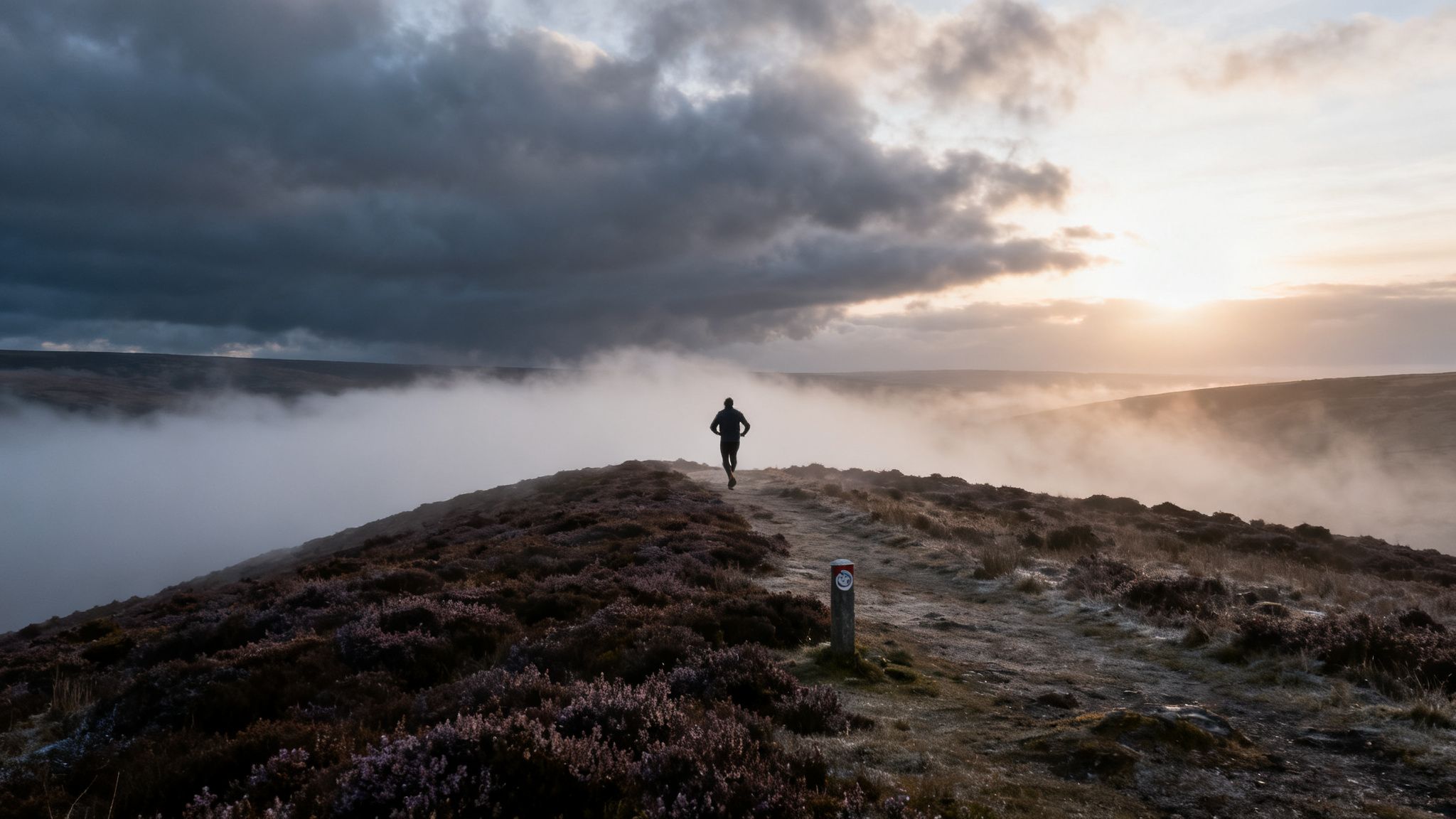
Dubbed "Britain's Most Brutal," the Spine Race is a formidable 268-mile (431-kilometer) winter ultramarathon that follows the entire Pennine Way, the mountainous backbone of England. Taking place in the unforgiving depths of January, this non-stop race pushes competitors against relentless freezing temperatures, gale-force winds, snow, and ice. With minimal daylight and a landscape that is both beautiful and treacherous, it is a true test of winter survival skills, navigation, and raw endurance.
The combination of the distance, the brutal weather, and a demanding seven-day cutoff time makes this race one of the hardest marathons in the world, let alone ultramarathons. Sleep deprivation is a major factor, with elite runners often finishing in under four days on just a few hours of sleep. The race has produced legendary performances, such as Jasmin Paris's record-shattering overall win in 2019, cementing its status as a pinnacle event in the ultrarunning community.
Tackling the Beast: Training and Strategy
Completing the Spine Race requires an elite skillset that merges ultrarunning fitness with advanced mountaineering and survival capabilities. Preparation is a multi-year endeavor focused on mastering the unique challenges of a long-distance winter expedition.
- Winter Mountaineering Skills: Extensive experience in harsh winter conditions is non-negotiable. This includes training on UK mountains in snow and ice, practicing self-arrest techniques, and understanding avalanche risks.
- Expert Navigation: GPS devices are known to fail in the extreme cold. Proficiency with a map and compass is mandatory for safety and success. Practice navigating in poor visibility and darkness.
- Gear Mastery: Your life depends on your kit. Test every piece of equipment, from waterproof layers to your sleep system, in real-world winter conditions. A failure in gear can mean a premature and dangerous end to the race.
- Sleep Deprivation Management: The race is a masterclass in managing exhaustion. Train on tired legs and practice taking short, strategic power naps. Mental resilience is crucial for making sound decisions when you are physically and mentally drained.
The Spine Race is an epic adventure reserved for the most prepared and resilient endurance athletes. Building the necessary winter survival skills and physical robustness is a long-term commitment, but for those who finish, the reward is a place among the toughest ultrarunners on the planet.
8. MDS Atacama – Atacama Desert, Chile
Journeying into the driest place on Earth, the MDS Atacama is a 6-day, 155-mile (250 km) self-supported ultramarathon that tests runners against one of the planet's most extreme and otherworldly landscapes. This race, formerly known as the Atacama Crossing, plunges competitors into the stark beauty of northern Chile’s Atacama Desert, a region so arid that some areas have no recorded rainfall. Participants endure a brutal combination of high altitude, bone-dry air, and punishing daytime temperatures that can exceed 100°F (38°C).
The course is as varied as it is unforgiving, taking runners across enormous salt flats, through deep canyons, over rocky scree fields, and up to altitudes reaching 13,000 feet. As a self-supported race, athletes must carry all their own food, gear, and safety equipment for the entire week, with only a daily water ration provided. This element adds a significant strategic challenge, making every ounce in the backpack a critical decision. It’s a race that attracts international ultrarunners and adventure athletes drawn to its unique environmental test.
Tackling the Beast: Training and Strategy
Success in the Atacama requires a blend of endurance, self-sufficiency, and strategic planning. The unique combination of altitude, aridity, and a heavy pack makes preparation for this race exceptionally demanding and easily one of the hardest marathons in the world.
- Weighted Pack Training: Integrate a weighted backpack (12-15 lbs) into your long runs to simulate race conditions. Practice running on varied terrain, including sand and hills, to build specific strength and stability.
- Heat and Altitude Acclimatization: Your body must be prepared for the dual stress of heat and altitude. Arrive in the region several days early to acclimate and combine heat training sessions (like saunas or hot-weather runs) with high-altitude hiking if possible.
- Gear and Food Mastery: Test every single piece of equipment, from your shoes to your sleeping bag, in conditions that mimic the race. Dial in your nutrition and hydration plan, ensuring you can stomach your chosen foods after hours of intense effort in the dry heat.
- Water Discipline: The air's extreme dryness can lead to rapid dehydration. Practice strict water rationing during training to understand your body’s needs and learn to sip consistently, rather than waiting until you feel thirsty.
Top 8 Hardest Marathons — Comparison
| Event | Preparation complexity | Resource requirements | Expected outcomes | Ideal participants / use cases | Key advantages |
|---|---|---|---|---|---|
| Badwater 135 – Death Valley, USA | Extremely high — 12–18+ months heat & altitude prep | Mandatory crew/pacer, extensive logistics, travel, medical planning | Low finish rate; elite-level completion confers legendary status | Elite ultrarunners seeking the ultimate single-stage endurance test | Ultimate prestige; dramatic desert-to-alpine route; strong aid infrastructure |
| Marathon des Sables – Sahara, Morocco | High — multi-week backpack training, heat adaptation | Self-sufficiency (carry food/gear), travel, camp logistics; moderate–high cost | Multi-day endurance challenge; high variability in completion; strong personal transformation | Adventure-minded amateurs and experienced multi-day racers | Iconic desert scenery; strong international community; staged expedition format |
| Western States 100 – Sierra Nevada, USA | High — 6–12 months mountain trail & long-run preparation | Crew support, travel, lottery entry process, moderate cost | Competitive finishes with high prestige; 30-hour cutoff pressure | Talented trail ultrarunners targeting historic 100-mile event | Historic prestige; excellent aid stations; varied alpine terrain |
| Everest Marathon – Nepal | High — altitude acclimatization, technical terrain prep | Expensive travel and acclimatization, specialized cold/altitude gear | Exclusive, altitude-dependent outcomes; memorable adventure experience | Adventure athletes with prior high-altitude trekking experience | World’s highest marathon start; unparalleled Himalayan scenery; cultural immersion |
| Hardrock 100 – San Juan Mountains, USA | Very high — 12–16 months technical mountain & scrambling training | Crew, mountain-specific gear, remote logistics, lottery entry | High DNF rate; finishing demonstrates elite technical mountain ability | Elite mountain runners seeking the most technical 100-miler in North America | Highest elevation gain among 100-milers; extreme technical challenge; strong mountain community |
| Comrades Marathon – South Africa | Moderate–High — 8–12 months endurance and hill training | Travel to South Africa, large-field logistics, low–moderate entry cost | Mass participation with strict 11‑hour cutoff; strong community recognition | Serious amateurs and elites seeking historic, large-field ultramarathon | Largest ultramarathon by participation; deep heritage; well-organized support |
| Spine Race – England | Extremely high — winter survival, navigation, sleep-deprivation prep | Specialized winter gear, navigation tools, long remote logistics | Low finish rates; extreme mental/physical test; survival-oriented outcomes | Elite winter endurance athletes with navigation and survival skills | Ultimate winter endurance challenge; legendary prestige; wilderness navigation test |
| MDS Atacama – Atacama Desert, Chile | High — heat and altitude adaptation, multi-day self-sufficiency training | Self-sufficiency (carry gear), travel to Chile, camp support; moderate cost | Multi-day desert expedition completion; varied finish rates; strong adventure value | Adventure ultrarunners seeking staged desert race with altitude elements | Unique desert landscapes (salt flats, canyons); organized camps; varied terrain challenge |
From Finish Line to Lasting Memory
The journey through the world's most demanding marathons is less about a single finish line and more about a profound transformation. We've traversed the blistering heat of Death Valley in the Badwater 135, navigated the unforgiving sands of the Marathon des Sables, and summited the dizzying altitudes of the Everest Marathon. Each race, from the rugged trails of the Hardrock 100 to the relentless Pennine Way of the Spine Race, presents a unique crucible designed to test the absolute limits of human endurance.
What defines the "hardest marathon in the world" is not a singular metric but a brutal combination of factors. It is the synergy of extreme weather, relentless elevation gain, technical and treacherous terrain, and the psychological fortitude required to push forward when every instinct screams to stop. These events are monumental undertakings that demand more than just physical fitness; they require meticulous planning, specialized training, and an unwavering spirit.
Key Takeaways from the World's Toughest Races
As you contemplate your own endurance journey, whether it's aspiring to one of these legendary races or pushing your limits on a new course, remember these core principles:
- Respect the Environment: The course is a character in your race story. Acclimatization for altitude, heat training for desert runs, and technical trail practice for mountain ultras are non-negotiable. The environment is the ultimate arbiter of success.
- Mental Fortitude is Paramount: Physical conditioning gets you to the starting line, but mental resilience gets you to the finish. Breaking down the race into manageable segments, practicing positive self-talk, and having a strong "why" are your most powerful tools when facing inevitable low points.
- Logistics Can Make or Break You: Success in these races often hinges on what happens off the course. This includes dialing in your nutrition and hydration strategy, testing your gear in race-specific conditions, and coordinating with a skilled support crew. Meticulous preparation minimizes the variables that can derail your race day.
Turning Your Achievement into a Legacy
Finishing a race like the Comrades Marathon or the MDS Atacama is a life-altering accomplishment. It represents months, even years, of sacrifice, discipline, and dedication. Such an extraordinary feat deserves more than a medal tucked away in a drawer; it deserves to be a visible testament to your strength and perseverance. Commemorating your journey is not just about celebrating a past event; it's about creating a daily source of inspiration.
Imagine having a visual record of your triumph. A detailed map showcasing the relentless climbs of the Western States 100 or a stage-by-stage visualization of your Sahara adventure can transform an abstract memory into a tangible piece of art. This isn't just decoration; it's a story. It's a powerful reminder of the challenges you overcame and the incredible resilience you discovered within yourself.
An athlete’s journey is written in miles, elevation, and time. When you conquer the hardest marathon in the world, that story deserves to be told in a way that inspires you and others every single day.
Preserving this memory allows you to honor the commitment it took to achieve your goal. It becomes a conversation starter, a source of motivation on difficult days, and a proud display of what you are capable of. Your hard-earned miles are a legacy, and capturing them ensures that the story of your epic accomplishment will continue to resonate long after the finish line has faded from view.
Ready to turn your incredible race journey into a stunning piece of art? RoutePrinter specializes in creating custom, high-quality posters that beautifully display your race route, elevation profile, and personal stats. Visit RoutePrinter to commemorate your achievement and keep the memory of your hardest marathon alive forever.