Your Ultimate Half Ironman Training Plan For Beginners

So, you're thinking about tackling a Half Ironman? That's a huge and exciting goal. For most beginners, a solid training plan will take somewhere between 16 to 20 weeks, with weekly training hours starting around 8 and peaking at 13. This isn't just about logging miles; it's a structured journey that builds your fitness step-by-step, getting you to the starting line healthy, confident, and ready for all 70.3 miles.
Your Journey To The 70.3 Finish Line
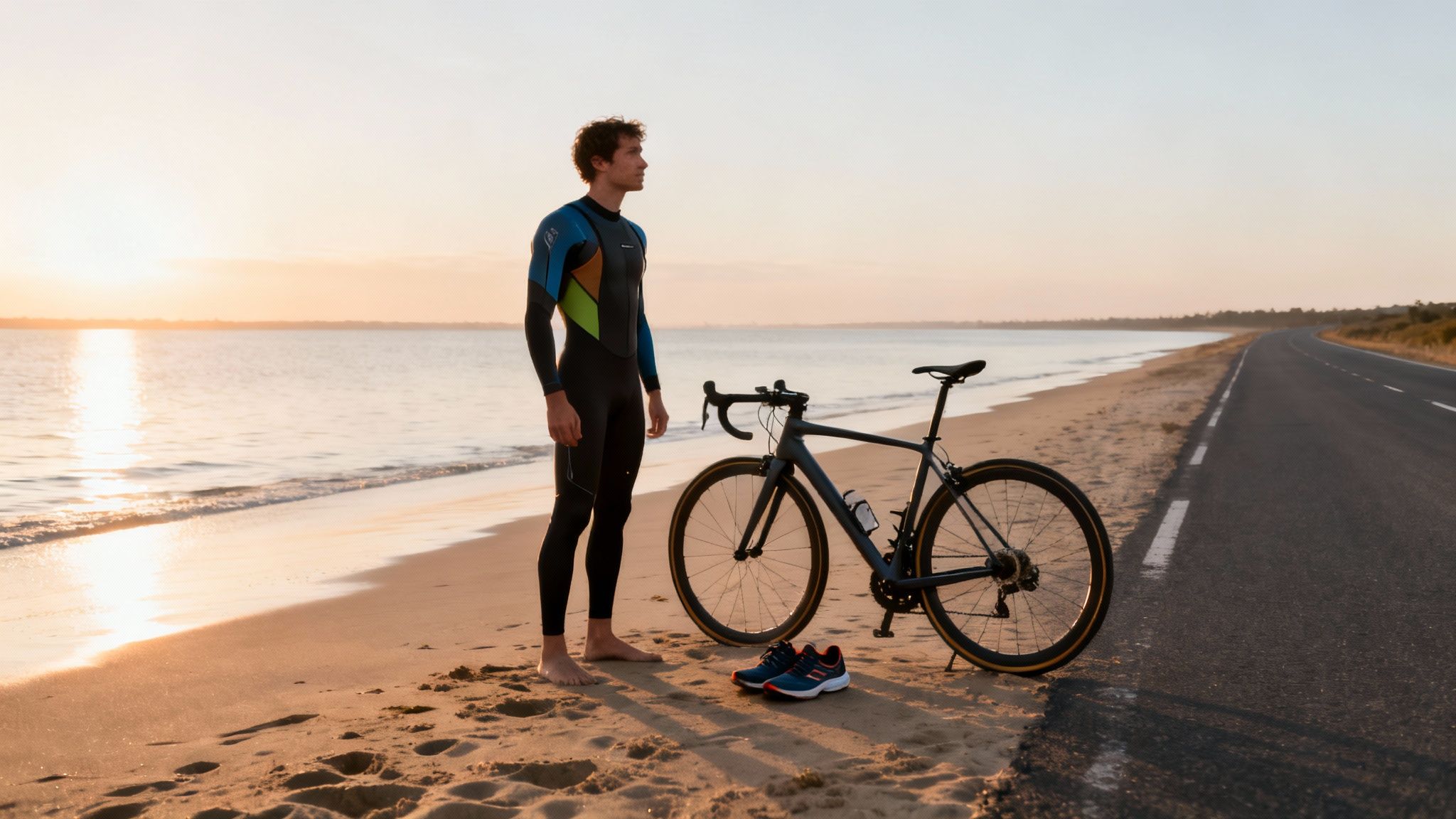
Deciding to do a Half Ironman is a big deal. The race itself is a serious undertaking: a 1.2-mile swim, a 56-mile bike ride, and a 13.1-mile run, all in one day. That 70.3-mile total can sound pretty daunting, but I promise you, it's a completely achievable goal if you approach it with a smart, consistent plan.
If you're reading this, you're probably asking yourself, "Can I really do this?" The answer is almost always yes. But success in triathlon isn't just about raw effort. It’s a three-legged stool: structured training, smart nutrition, and dedicated recovery. Get those three things right, and you’ll build incredible endurance while sidestepping the injuries and burnout that plague so many new athletes.
Understanding The Commitment
For most people starting out, a 16 to 20-week plan is the sweet spot. This gives your body enough time to safely adapt to the new stresses of swimming, cycling, and running without rushing things.
You’ll likely start with about 8 hours of training a week. That volume will climb steadily, hitting a peak of 12-13 hours a few weeks before your race. Then, you'll "taper" down to rest up for the big day.
And you're not alone. The world of endurance sports is booming, especially for first-timers.
Globally, over 250,000 athletes registered for Ironman and 70.3 events, with first-time participants increasing by 10% year-over-year. The growth among athletes under 30 has been particularly notable, jumping 35%, showing a new generation is embracing the challenge. You can dig into more triathlon participation statistics to see just how much the sport is growing.
This surge proves one thing: with the right approach, crossing that finish line is a very real possibility for people just like you.
Why A Structured Plan Is Essential
A well-designed half ironman training plan for beginners is more than just a calendar of workouts—it's your roadmap. It takes the guesswork out of the equation and keeps you on track. Here’s why it's so important:
- It helps you avoid injuries. The most common mistake I see is doing too much, too soon. A good plan builds intensity and volume gradually, with built-in rest days, so your body can actually absorb the training and get stronger.
- It builds your fitness logically. You don’t just start hammering out race-pace miles. The plan will guide you from building a solid aerobic base to layering on strength and speed, all timed to have you peaking on race day, not two weeks before.
- It creates consistency. Let's be honest, motivation comes and goes. But when you know exactly what your workout is for the day, it’s so much easier to get it done. Consistency is the secret sauce in endurance sports, and a plan is what keeps you stirring.
Think of your training plan as a coach in your corner. It turns a massive, intimidating goal into a series of small, manageable daily wins that lead you straight to that finish line.
Building Your Training Foundation and Gear
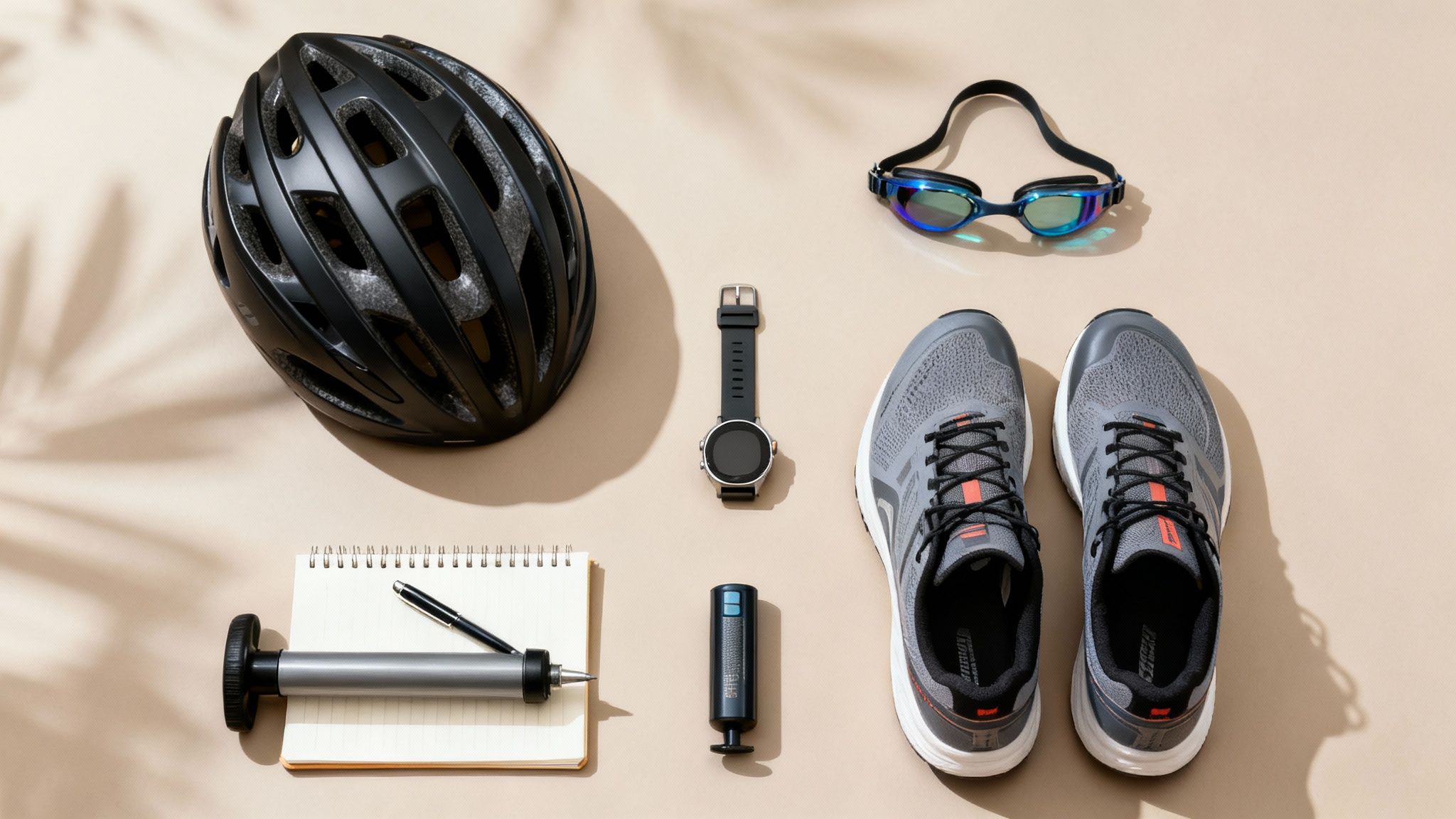
It’s tempting to dive headfirst into a demanding training plan, but jumping in without the right foundation is a classic rookie mistake. Before you even think about logging serious miles, we need to cover two critical areas: establishing a solid fitness base and getting the right gear without breaking the bank.
Think of your base fitness as the prerequisite for your formal training. It's all about making sure your body is ready for the volume and intensity to come. Nailing this step is the single best way to avoid those frustrating early-season injuries. This isn't about being fast yet; it's about being durable.
Do You Have the Right Base Fitness?
So, what does a good starting point actually look like? Before you officially kick off a 16-week plan, you should be able to comfortably handle the following workouts. Don't worry, you don't need to do them all on the same day!
- Swim: 400 meters (or yards) continuously, without stopping.
- Bike: 60 minutes of steady cycling.
- Run: 30 minutes of continuous running.
If you can tick all three boxes, you're in a great spot to start. If not, don't sweat it—this is a very common scenario. Just give yourself an extra 3 to 4 weeks to build up to these milestones before you start Week 1 of the main plan. A simple "pre-plan" could be two sessions of each sport per week, gradually extending the time until you hit those targets.
Key Takeaway: Starting with a proper base is non-negotiable. It preps your joints, muscles, and cardiovascular system for the work ahead, making your training more effective and a lot more fun from day one. Rushing this is probably the most common mistake I see new triathletes make.
Essential Gear You Actually Need
The world of triathlon gear can feel overwhelming, with a price tag to match. But here's the good news: you don't need all the latest and greatest gadgets to have a fantastic race. Let's separate the true must-haves from the "nice-to-haves."
Your Must-Have List:
- A Reliable Bike: This doesn't have to be a flashy, high-end triathlon bike. A well-maintained road bike that fits you properly is more than enough for your first 70.3. A professional bike fit is one of the smartest investments you can make to prevent injury and boost comfort.
- Properly Fitted Running Shoes: This is a big one. Go to a specialty running store and get your gait analyzed. The right shoes are your best defense against shin splints, knee pain, and other common running injuries.
- Swim Goggles: Find a pair that seals to your face without leaking. It might take trying a few different models, but a comfortable, clear view in the water is priceless.
- A Bike Helmet: Safety first, always. No helmet, no ride—it's that simple.
- A Trisuit: This all-in-one outfit is designed to be worn for the swim, bike, and run. It saves you a ton of time and hassle in transition, making it one piece of specialized gear that is absolutely worth it. If you need help choosing, check out this great guide on what to wear for triathlons.
Gear That Is Nice to Have
These items can definitely enhance your training and racing experience, but they are by no means necessary when you're just starting out. Think of them as potential upgrades down the road.
- A GPS Watch: Incredibly useful for tracking your pace, distance, and heart rate, but a simple watch or even a phone app can get the job done when you begin.
- A Wetsuit: If your race is in chilly water, a wetsuit might even be mandatory. But it also provides a huge buoyancy boost, which is a major confidence-builder for swimmers. You can often rent one just for race day to save money.
- Clip-in Pedals and Cycling Shoes: These lock your feet to the bike, giving you a more efficient and powerful pedal stroke. Most people eventually upgrade to these.
- Aero Bars: These are the clip-on extensions that put you in a more aerodynamic riding position. They can make you faster, but they aren't necessary for beginners.
For now, just focus on getting the must-haves squared away. You can always add to your gear collection later. With your base fitness established and your essential kit ready to go, you're officially prepared to start this incredible journey.
The 16-Week Beginner Half Ironman Training Plan
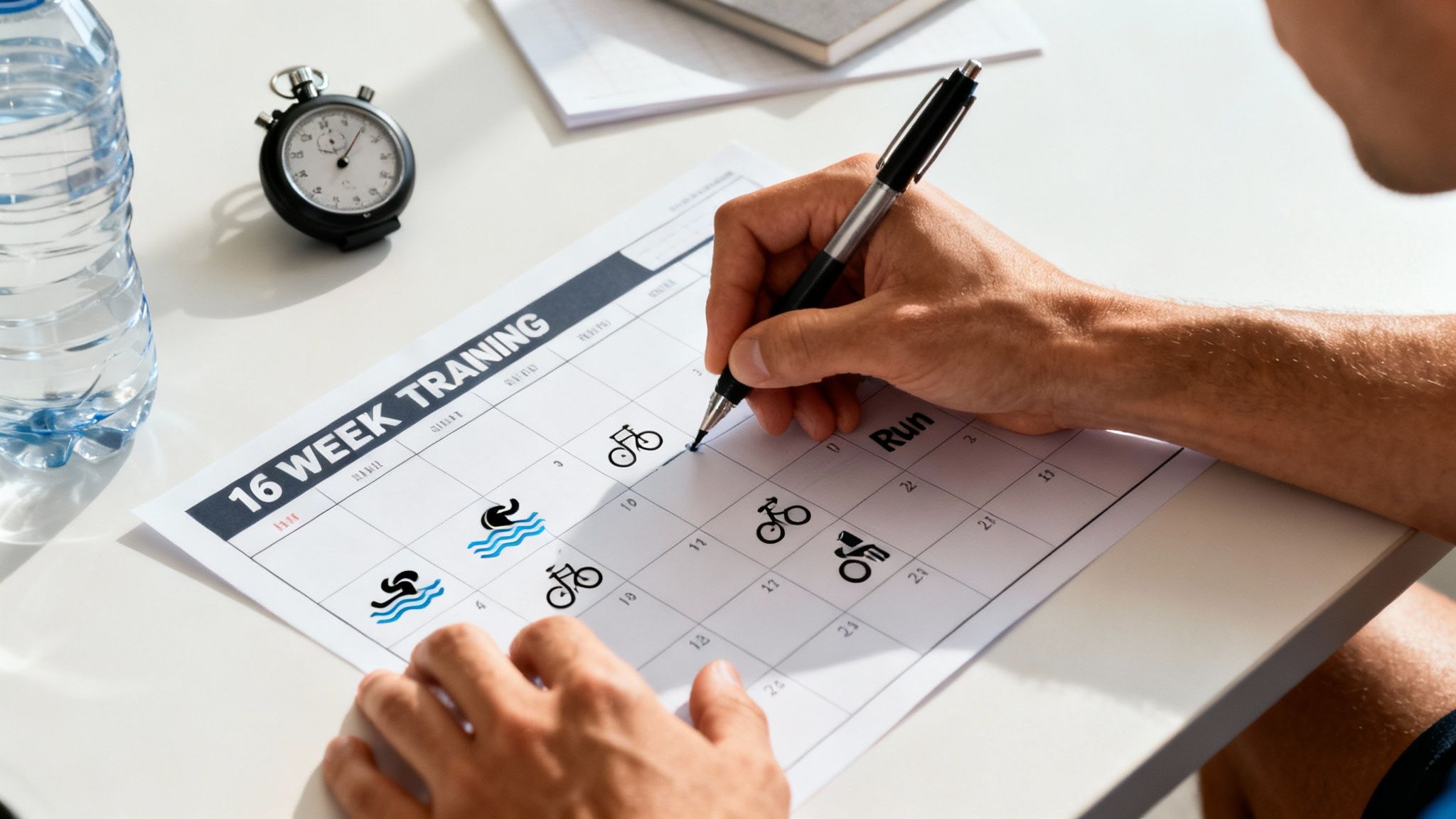
Alright, this is where the rubber meets the road. We've structured your 16-week journey into four distinct phases, each lasting four weeks. This isn't just a random schedule; each block builds on the last, designed to get you stronger and more confident as you go, ensuring you show up to the start line healthy and raring to go.
The entire plan is built around the tried-and-true 80/20 training principle. What does that mean? Simply put, 80% of your training is done at a low, easy, conversational intensity (think Zone 2), while only 20% is spent on that harder, breathy work. This is the gold standard for building a massive aerobic engine while sidestepping the injuries and burnout that plague so many athletes.
Phase 1: Base Building (Weeks 1-4)
The first four weeks are all about laying the foundation. Forget about speed for now. Your only goals are consistency and getting your body used to the work. You're essentially teaching your body to become a more efficient endurance machine.
Every workout should feel controlled. On the bike and run, you should be able to chat with a training partner without gasping for air. In the pool, the focus is squarely on technique and smooth breathing, not thrashing your way through the laps.
What We're Trying to Achieve Here:
- Establish a Routine: Getting your body and mind into the rhythm of regular swim, bike, and run sessions is half the battle.
- Build Your Aerobic Engine: Spending most of your time in Zone 2 is how you build deep, sustainable endurance.
- Dial in Your Form: This is the perfect time to work on good technique, especially in the water, before bad habits set in.
Think of this phase like pouring the concrete for a skyscraper. You can't build high without a solid base. Trying to skip ahead is a rookie mistake that almost always leads to trouble down the road.
Your main goal is to finish each week feeling good, not wiped out. If you get to the end of Week 4 feeling energized and excited for what’s next, you’ve absolutely nailed it.
Phase 2: Strength and Endurance (Weeks 5-8)
With a solid base under your belt, it's time to start adding some layers. In this phase, you'll see the duration of your long weekend workouts start to climb. This is where that real 70.3 fitness begins to take shape.
We’ll also start sprinkling in some moderate intensity, often called "tempo" work. These are efforts that feel "comfortably hard"—you're working, but you're not seeing stars. This is key for raising your lactate threshold, which basically means you can hold a faster pace for longer before your legs start screaming at you.
And now, we introduce every triathlete’s secret weapon: the brick workout.
To give you a clearer picture, here’s what a typical week in this phase might look like. Notice the balance of the three sports, the dedicated rest day, and the placement of the key long workouts on the weekend.
Sample Training Week (Strength And Endurance Phase)
| Day | Workout Focus | Duration / Details |
|---|---|---|
| Monday | Rest or Active Recovery | Complete rest or a very light 20-30 min swim/spin. |
| Tuesday | Swim (Technique & Strength) | 60 minutes: Focus on drills (e.g., catch-up, sculling) and include some slightly harder efforts (e.g., 8 x 100m at tempo). |
| Wednesday | Bike (Tempo Intervals) | 75 minutes: Include a warm-up, 3 x 10 minutes at a "comfortably hard" pace, and a cool-down. |
| Thursday | Run (Easy Pace) | 45-50 minutes: Keep it conversational (Zone 2). Focus on consistent pacing and good form. |
| Friday | Strength Training or Rest | 30-40 minutes: Full-body functional strength (squats, lunges, core work) or take a full rest day if needed. |
| Saturday | Long Bike + Brick Run | 2.5-3 hours Bike (easy pace) immediately followed by a 20-minute Run off the bike. Practice your race day nutrition. |
| Sunday | Long Run | 75-90 minutes: Run at a steady, aerobic pace. This is about time on your feet, not speed. |
This structure provides a great blueprint for balancing the workload. Remember to listen to your body and adjust as needed—some weeks you'll feel stronger than others, and that's perfectly normal.
Your Secret Weapon: The Brick Workout
So, what exactly is a brick workout? It's simple: you do a run immediately after getting off your bike. The first time you do it, your legs will feel like jelly—heavy, uncoordinated, and just plain weird. That's normal! Brick workouts train your legs and brain to handle that unique bike-to-run transition so it’s not a complete shock on race day.
Here's the drill:
- Finish your ride.
- Transition quickly. Have your running shoes and hat ready to go. The goal is to mimic race conditions, so don’t dawdle.
- Start running immediately. Even a 15-20 minute run right off the bike works wonders.
This is hands-down one of the most important sessions in any half ironman training plan for beginners.
Phase 3: Peak Performance (Weeks 9-12)
Welcome to the heart of the training plan. This phase is the most challenging, but it’s also where you'll see the biggest gains. Your total training volume and intensity will peak here. Your long rides will start getting close to the full race distance, and your long runs will build the durability you need for a strong half-marathon.
The focus shifts to race-specific work. You'll be doing more workouts at or near your goal race pace. This isn't just about physical conditioning; it's a massive confidence booster. You'll learn what your race effort feels like and get to practice your nutrition and hydration strategy under pressure.
Most solid plans that build from base fitness over 16 weeks will see weekly hours peak around 12-15 hours during this phase. Sticking to that 80/20 intensity split becomes even more crucial now to avoid injury when the volume is high. It’s a strategy fueling success across the globe, contributing to the global rise in triathlon sign-ups.
During these weeks, recovery is just as vital as the training itself. Make sleep a priority, fuel your body properly, and don't be a hero. It's normal to feel tired, but you shouldn't feel completely wrecked.
Phase 4: Taper and Race (Weeks 13-16)
You’ve banked all the hard work. Now, it's time to let your body absorb it all. The "taper" is the final two or three weeks where you strategically cut back on your training volume. It feels completely wrong—you’ll be itching to go hard—but you have to trust the process.
The taper is magic. It allows your body to:
- Heal and repair all the micro-damage from months of training.
- Restock muscle glycogen so you're fully fueled for race day.
- Shake off deep fatigue so you arrive at the start line feeling fresh and powerful.
Your training volume will drop by about 25-30% each week, but you’ll keep a few short, sharp efforts in there just to keep the engine primed. By race week, your workouts are laughably short and easy. The hay is in the barn. It’s time to get ready to race.
Fueling Your Body For Endurance
If training builds the engine, then nutrition is the high-octane fuel that makes it run. I've seen countless beginners make the same mistake: they hammer out the workouts but completely underestimate the sheer volume of calories needed to train, recover, and actually get stronger.
Think of it this way: your workouts break your body down. The food you eat provides the raw materials to rebuild it, tougher than before.
Your day-to-day eating should be all about balance. Don't get hung up on counting every single calorie. Instead, aim for a plate that’s roughly 50% carbohydrates for energy, 25% lean protein for muscle repair, and 25% healthy fats for everything from hormone function to overall health. It's about making smart, consistent choices that can keep up with your training.
Fueling Your Workouts
This is where the wheels can fall off for a lot of new triathletes. For any workout pushing past the 75-90 minute mark, you have to start putting fuel back in. Your body only has a limited supply of stored energy (called glycogen), and when you run low, you hit the dreaded "wall." It's not pretty.
Your goal is to get in 30-60 grams of carbohydrates per hour on those long sessions. This is your chance to dial in what you’ll do on race day.
- Energy Gels: The classic choice. They're basically concentrated, easy-to-digest carbs. Most gels pack about 20-25 grams.
- Energy Chews: A great alternative if you can't stand the texture of gels. They're gummy, solid, and offer the same quick energy.
- Sports Drinks: These are workhorses, giving you hydration, electrolytes, and carbs all at once. A single bottle might have 20-30 grams of carbs.
Your long Saturday bike ride is the perfect laboratory. Try out different brands, flavors, and types. You might find one brand sits perfectly, while another sends your stomach into knots. You absolutely need to figure this out in training, not on the morning of your race.
The Art of Hydration
Being properly hydrated is every bit as important as fueling. Get it wrong, and you're looking at cramps, a nosedive in performance, and potentially some serious health trouble. The key isn't just to chug water; it's to replace the critical electrolytes, like sodium and potassium, that you're pouring out through sweat.
Pro Tip: If you wait until you feel thirsty, you're already behind. Thirst is one of the first signs of dehydration. Get in the habit of sipping consistently throughout your workouts. A good starting point is one standard water bottle (16-24 oz) per hour, but you’ll need to adjust that up when the heat and humidity climb.
On those scorching hot days, your needs will skyrocket. It’s a good idea to add electrolyte tablets or salt capsules to your routine to keep your sodium levels up and stave off those race-ending cramps.
Post-Workout Recovery Fuel
What you eat right after a workout is just as important as what you eat during it. There’s a crucial 30-60 minute "recovery window" immediately after a tough session. In this window, your muscles are like sponges, ready to soak up nutrients to repair damage and restock their energy stores.
You’re looking for a snack or meal with a 3:1 or 4:1 ratio of carbohydrates to protein. This combination is scientifically proven to be the sweet spot for recovery. It doesn't have to be complicated:
- Chocolate milk is a classic for a reason.
- A banana with a big scoop of peanut butter.
- A simple protein shake with some fruit blended in.
- Greek yogurt with a handful of berries and a drizzle of honey.
This one simple step will make a massive difference in how sore you feel and how ready you are to tackle your next workout. And if you're finding the run sessions to be a particular struggle, remember that nutrition plays a huge part—you can find more tips in our article on how to improve running endurance.
Ultimately, mastering your fuel and hydration strategy is what separates a good training plan from a great one.
Nailing Your Recovery And Race Week Prep
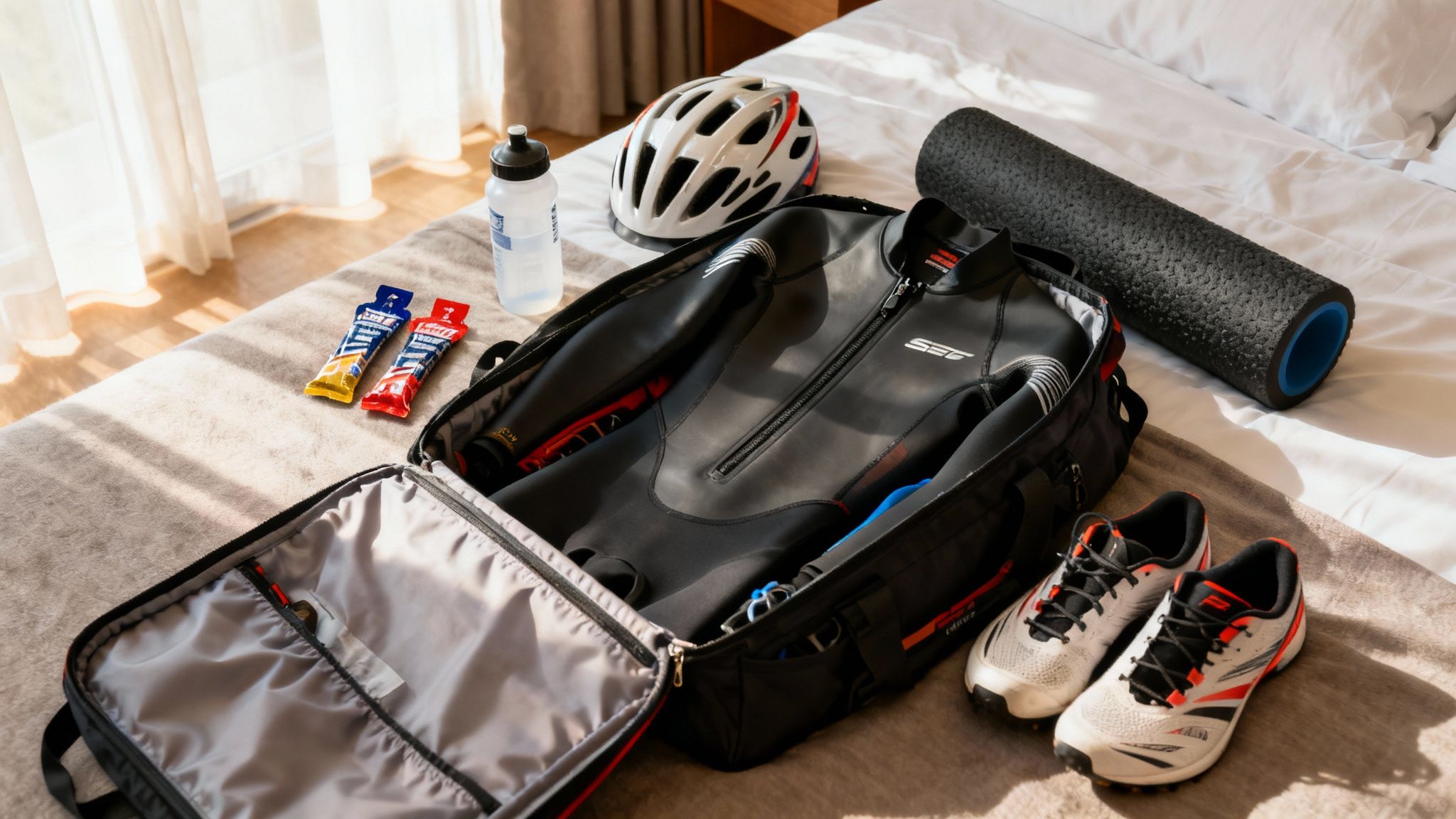
You can have the perfect training block, but if you show up to the start line exhausted or injured, all that hard work is for nothing. Getting to race day healthy, energized, and mentally dialed-in is just as crucial as any long bike ride or track session you've logged.
This is where the art of recovery and the final-week taper come into play. Many beginners mistakenly see rest days as a sign of weakness or a missed opportunity to get fitter. The truth is the exact opposite. You don't get stronger during the workout; you get stronger after, when your body is busy repairing and adapting.
Recovery isn't just taking time off—it's an essential, active part of your training plan.
How To Build A Bulletproof Recovery Routine
A smart recovery strategy is more than just flopping on the couch. It’s a series of small, consistent habits that speed up your body’s repair process and get you ready for the next session.
- Make Sleep Your Top Priority: You absolutely have to aim for 7-9 hours of quality sleep a night. This is when your body does its most important work, releasing growth hormones to repair muscle tissue.
- Try Active Recovery: On your off days, don't just sit still. A gentle walk, an easy spin on the bike, or a light swim gets the blood flowing, helping to flush out metabolic waste from your muscles.
- Use Your Foam Roller: Just 10-15 minutes of foam rolling and dynamic stretching after your workouts can make a world of difference. It helps release tight spots and improve your mobility, which is a huge part of staying injury-free. Taking proactive steps here is key to prevent running injuries before they start.
Don't just plan your workouts; plan your recovery. Treating rest with the same seriousness as your long rides and runs is what separates athletes who thrive from those who merely survive their training plan.
Trust The Taper
Those final two weeks before the race are all about the "taper." This is where you strategically slash your training volume to let your body fully recover. It can feel strange, even a little nerve-wracking, to back off so close to the big day.
Your hours will drop significantly, but you'll keep a few short, sharp efforts in the mix to stay sharp. This process is non-negotiable. It allows your body to top off its glycogen stores (your main fuel source), heal any lingering fatigue, and get you feeling fresh. You'll probably feel antsy and like you should be doing more. That’s a good sign! You want to arrive at the start line feeling like a caged animal, ready to go.
Your Ultimate Race Week Checklist
The last few days are always a blur of logistics and nerves. Use a checklist to keep your head on straight and make sure you don't miss anything important.
4-5 Days Out:
- Start hydrating consistently with water and electrolytes.
- Lay out all your gear—trisuit, helmet, goggles, shoes, nutrition. Check everything for wear and tear.
- Pack your transition bags. I recommend using separate bags for T1 (swim-to-bike) and T2 (bike-to-run) to stay organized.
The Day Before:
- Hit the athlete briefing and check in your bike and gear bags at the race venue.
- Eat a simple, carb-heavy dinner you’ve had many times before. This is not the night to try that new spicy dish.
- Set a backup alarm (or two!) and try to get to bed early.
Race Morning:
- Eat your tried-and-true pre-race breakfast 2-3 hours before the gun goes off.
- Get to the transition area with plenty of time. You don't want to be rushed while setting up your spot, pumping your tires, or doing one last mental walkthrough.
- Pull on your wetsuit about 20-30 minutes before your wave start and, if possible, get in the water for a short warm-up.
By taking control of these final steps, you can calm your nerves and set yourself up for an amazing day out on the course. You've earned it.
Your Half Ironman Questions Answered
Taking on your first Half Ironman is a massive goal, and it’s totally normal to have a million questions swirling around in your head. How much time will this take? What if I panic in the open water? What gear do I really need? Let's cut through the noise and get you some straight answers.
Think of this as a conversation with a seasoned coach. We'll tackle the most common worries and uncertainties so you can focus on what matters: your training.
How Many Hours A Week Do I Need To Train?
This is the big one, isn't it? We all have jobs, families, and lives outside of triathlon. The good news is, you don't have to train like a pro to cross that finish line. A solid half ironman training plan for beginners usually starts off with a very manageable 6-8 hours per week.
The goal early on is simply to build a consistent routine and get your body used to the load. From there, you'll slowly and sensibly increase the volume. At the absolute peak of your plan, you'll likely hit around 10-13 hours for a couple of key weeks before you start to taper.
A typical peak week might break down something like this:
- Swimming: Two sessions, maybe 2 hours total.
- Biking: The long ride is king here, hitting 3-4 hours, plus a shorter ride during the week.
- Running: One long run building toward 1.5-2 hours, with another shorter run mixed in.
- Strength: One or two quick 30-minute sessions focused on your core and stabilizing muscles.
It's all about that gradual progression. That’s the secret sauce to getting stronger without getting hurt.
What Are The Most Common Beginner Mistakes?
I've seen them all, and trust me, learning from others' mistakes is a lot less painful than making them yourself. The classic rookie errors are almost always avoidable.
The number one culprit? Too much, too soon. You're excited, I get it! But ramping up your mileage or intensity without a proper foundation is the fastest way to get sidelined with an injury. Right behind that is neglecting recovery and nutrition. You simply can't out-train a bad diet and a chronic lack of sleep—your body will break down.
Another classic blunder is not practicing with your race-day nutrition and gear. The morning of your 70.3 is the absolute worst time to discover that your new trisuit chafes or that your chosen energy gel sends you running for the porta-potty. The same goes for skipping brick workouts; that bike-to-run transition is a unique kind of challenge, and you need to prepare your legs for it.
Do I Really Need A Triathlon Bike Or A Wetsuit?
It's so easy to get dazzled by all the fancy gear, but let’s be practical. No, you absolutely do not need a multi-thousand-dollar triathlon bike to finish your first 70.3. A standard road bike that fits you well will get the job done just fine. Comfort and a good bike fit are far more important than aerodynamics when you're just starting out.
A wetsuit, on the other hand, is something you should seriously consider buying or renting. Many races in cooler climates require them for safety, but the real benefit is the buoyancy. A wetsuit literally lifts your hips and legs in the water, making you more streamlined. This saves a massive amount of energy and almost always makes you faster—a huge confidence boost for nervous swimmers.
Always check the rules and average water temperature for your specific race, but for most first-timers, a wetsuit is a game-changer.
How Can I Overcome Open Water Swim Anxiety?
First off, know that you are not alone. A fear of the open water is incredibly common, even for people who are perfectly comfortable in a pool. The trick is to face it with gradual exposure, not by just jumping into the deep end and hoping for the best.
Find a safe, designated swim area and go with a friend or a group. Your first few times out, maybe you just wade in, get used to the temperature, and practice putting your face in the water. Forget swimming laps; just get comfortable.
Practice "sighting"—lifting your head to spot a landmark every 6-8 strokes—so you learn to swim straight without lane lines. A brightly colored swim cap and a personal safety buoy (that little inflatable float that trails behind you) can also do wonders for your peace of mind. Bit by bit, that anxiety will be replaced by confidence.
Once you cross that finish line, celebrate your incredible achievement with a custom race poster from RoutePrinter. Turn your hard-earned miles into a piece of art that commemorates your journey, complete with your personal event details and finish time. Design your personalized race poster today!